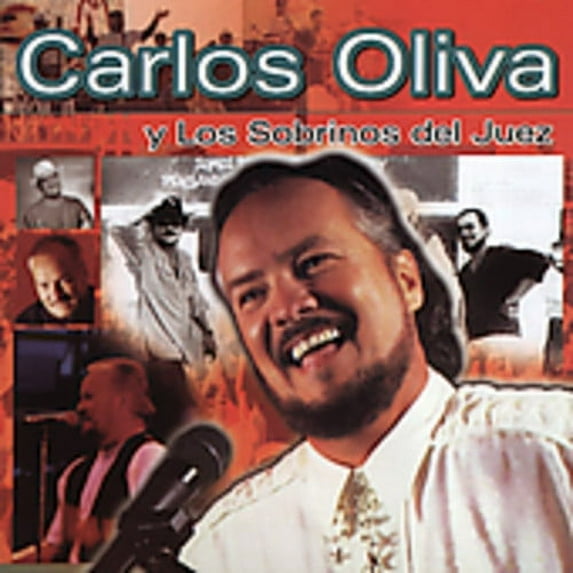
Carlos Oliva was born on a February 15th in one of Cuba's most beautiful cities, Sancti-Spiritus, province of Las Villas. Without a doubt, this Aquarian portrayed his musical talent at an early age, singing when he was just learning his first few words. As time went by and almost without realizing it, Carlos was playing congas, bongoes and drums, 'jamming' with every orchestra that would perform in his hometown. In 1961, he went to Colombia and then to Miami, as part of one of the first exiled groups that escaped the island of Cuba. He began working with the Cuban Catholic Youth Program in a camp known as 'Matecumbe', which was also part of Catholic Welfare, in a program known as 'Peter Pan'. It was there, while working as an instructor or counselor, helping kids that would arrive without their parents, that he met others who shared his passion for music; one of them was none other than Willy Chirino. With his great enthusiasm and optimism, he formed a trio and started playing at the Sands Hotel in Miami Beach. While there, he met Julio Gutiérrez, the Cuban musician, arranger and composer of the 40's, legendary author of the boleros 'Inolvidable' and 'Llanto de luna'.With Julio and Willy Chirino, Roberto Lozano and Héctor Fernández, he went to New York. Afterwards, Chirino returned to Miami and Carlos stayed with Julio Gutiérrez, singing and playing drums with his orchestra, sharing stage with many well known artists of today, who were then just making a name for themselves. In 1967 and still in New York, he established a trio with Eddy Elmer and Héctor Fernández, who would later be substituted by his brother Javier Oliva in Miami. This was the beginning of 'The Judge's Nephews', name inspired in the famous phrase by Sammy Davis Jr.: 'Here comes the Judge...' The performances of Carlos Oliva and his trio became a huge success at 'The Forge' in Miami Beach, where they would play songs like 'Guantanamera' and 'Cu cu rru cu cú paloma' in 'rock-influenced' arrangements, and Stevie Wonder tunes in Son and Guaracha arrangements. These are considered to be 'the experiments' that led to the development of what would be known as the 'Miami Sound'. Movie star Connie Stevens, one of The Forge's most assiduous visitors and her manager, were fascinated by the unique style of 'The Judge's Nephews' and they arranged performances in the most important show venues of Las Vegas. Their success was unprecedented and The Judge's Nephews even performed in the Mike Douglas Show of NBC Television. The Judge's Nephews had recorded two albums, both extremely successful locally, when the inevitable occurred: the international success of 'Glorioso San Antonio', composed by Brazilian authors Antonio Carlos and Jocaffi. Carlos Oliva's great talent in using all the rhythmic elements in a melody inspired in religious processions, made this song a great hit. Since then, 'Pelotero la bola', 'Ekelecuá', 'Dime si te gustó', 'Vehículo', 'Yayabo' and others, have confirmed the success and continuity of this great band. A solid and successful career, the magnetism of a super personality, a great sense of creativity and a television image known to national audiences, have all impressed millions of people. Carlos Oliva's place in the history of Latin Music in the United States is guaranteed by his position, without a doubt, as one of the founders of the musical movement developed by the fusion of rock, jazz, samba, son, guaracha and other Cuban rhythms, known today as the 'Mia


 WARNING: