

Best Camping & Teepee Tents for Kids & Families(233)
12Ft Camping Tent 6-7 Person 4 Season with 8 Mesh Windows, Outdoor Teepee Tent with Waterproof Material for Family and Friends Camping $118.90

12Ft Camping Tent 6-7 Person 4 Season with 8 Mesh Windows, Outdoor Teepee Tent with Waterproof Material for Family and Friends Camping
Kids Play Tent - Large Portable Foldable Teepee, Indoor Blackout, Toys Playhouse, Privacy Bed Tent, Christmas/Birthday Gifts for Boys & Girls $32.59 Was $32.89
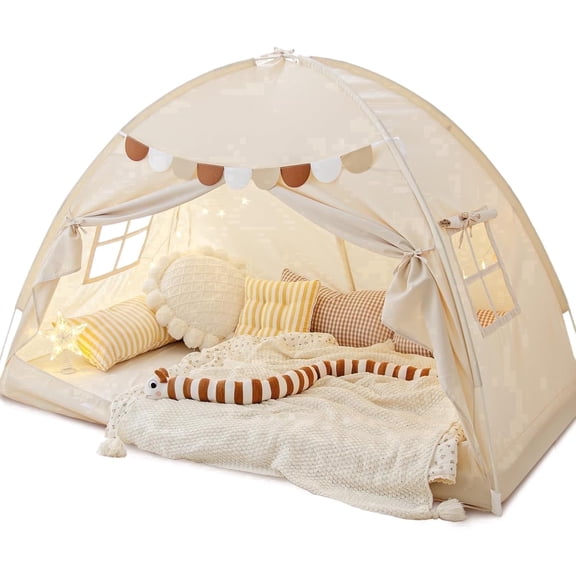
Kids Play Tent - Large Portable Foldable Teepee, Indoor Blackout, Toys Playhouse, Privacy Bed Tent, Christmas/Birthday Gifts for Boys & Girls

1-2 Person Lightweight Camping Tent with PU-Coated Polyester Rainfly, Aluminum Poles, Mesh Ventilation, Free-Standing Design and Carry Bag for Hiking, Camping and Outdoor Adventures $49.99

1-2 Person Lightweight Camping Tent with PU-Coated Polyester Rainfly, Aluminum Poles, Mesh Ventilation, Free-Standing Design and Carry Bag for Hiking, Camping and Outdoor Adventures
Guide Gear 18' x 18' Teepee Tent $199.99 Was $239.99 $199.99/count
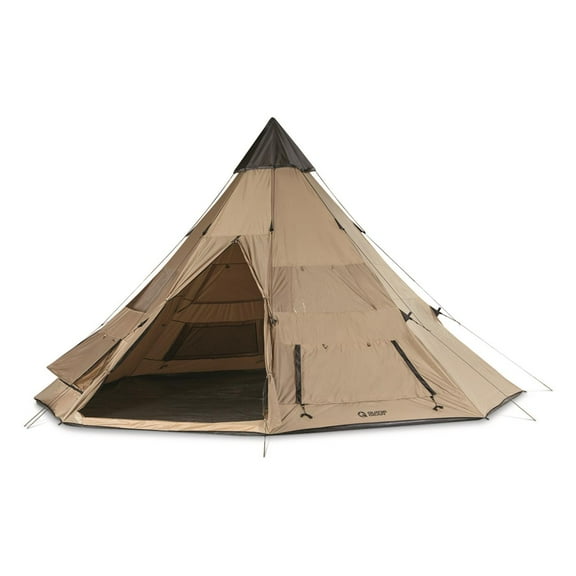
Guide Gear 18' x 18' Teepee Tent
Guide Gear 10' x 10' Teepee Tent $139.99 Was $164.99 $139.99/count
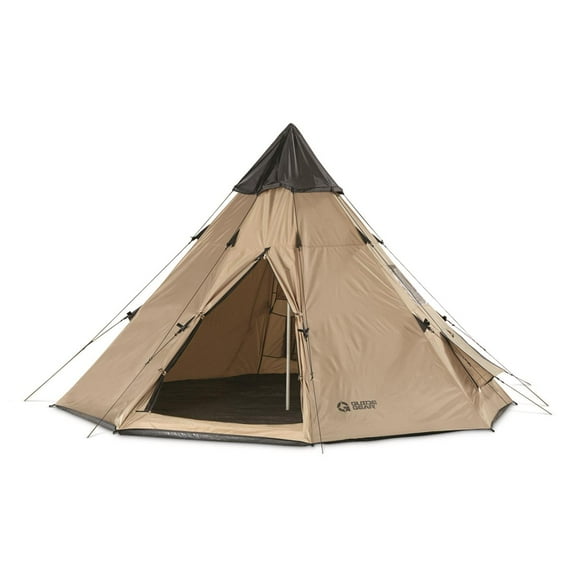
Guide Gear 10' x 10' Teepee Tent
Flash Deal Camping Pyramid Teepee Tent with Stove Jack, Tipi Hot Tent for 4 6 People $125.99 Was $139.99

Camping Pyramid Teepee Tent with Stove Jack, Tipi Hot Tent for 4 6 People
12Ft Camping Tent 6-7 Person 4 Season with 8 Mesh Windows, Outdoor Teepee Tent with Waterproof Material for Family and Friends Camping $118.90
12Ft Camping Tent 6-7 Person 4 Season with 8 Mesh Windows, Outdoor Teepee Tent with Waterproof Material for Family and Friends Camping
Guide Gear 18' x 18' Teepee Tent $199.99 Was $239.99 $199.99/count
Guide Gear 18' x 18' Teepee Tent
Ozark Trail 10 Person Glamping Ridge Tent with Awning $155.00

Ozark Trail 10 Person Glamping Ridge Tent with Awning

WAWOKV 4 Season Canvas Bell Tent 9.8 FT Waterproof All Weather Glamping Yurt Tent, Luxury Hot Tent Stove Jack, Breathable Spacious Family Camping Teepee for People Outdoor Hunting Party Event $199.99


WAWOKV 4 Season Canvas Bell Tent 9.8 FT Waterproof All Weather Glamping Yurt Tent, Luxury Hot Tent Stove Jack, Breathable Spacious Family Camping Teepee for People Outdoor Hunting Party Event
Clearance JXXRZ 9.8FT Bell Tent for Camping, Waterproof 4 Season Glamping Tent with Stove Jack, Beige $179.99 Was $199.99

JXXRZ 9.8FT Bell Tent for Camping, Waterproof 4 Season Glamping Tent with Stove Jack, Beige
15.4'x15.4'x8.5' Teepee Tent, Waterproof Camping Tent with Porch Area, Floor and Carry Bag, for 2-3 Person Outdoor Backpacking Camping Hiking, Blue $124.80

15.4'x15.4'x8.5' Teepee Tent, Waterproof Camping Tent with Porch Area, Floor and Carry Bag, for 2-3 Person Outdoor Backpacking Camping Hiking, Blue
Clearance JXXRZ 9.8FT Bell Tent for Camping, Waterproof 4 Season Glamping Tent with Stove Jack, Beige $179.99 Was $199.99


JXXRZ 9.8FT Bell Tent for Camping, Waterproof 4 Season Glamping Tent with Stove Jack, Beige
Nebublu Camping Tent with Stove Jack, Teepee Tent for Hiking and Family Camping, 10.5' x 5.2' $110.34

Nebublu Camping Tent with Stove Jack, Teepee Tent for Hiking and Family Camping, 10.5' x 5.2'
One Person Camping Tipi Hot Tents with Stove Jack 4 Season Teepee Tent for Hunting Backpacking Hiking Black $89.99
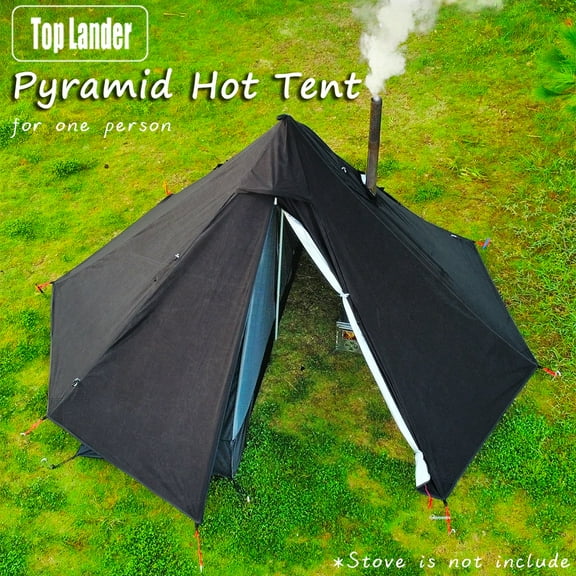


One Person Camping Tipi Hot Tents with Stove Jack 4 Season Teepee Tent for Hunting Backpacking Hiking Black
2-Person Lightweight Hot Tent with Stove Pipe Jack - 4 Season Waterproof Canvas Shelter for Camping, Hiking, Backpacking $83.39

2-Person Lightweight Hot Tent with Stove Pipe Jack - 4 Season Waterproof Canvas Shelter for Camping, Hiking, Backpacking
Inflatable Camping Tent 6.6m2 Large Space, 6-8 Person Glamping Tent With Sturdy Canvas, 360 Ventilated Windows, Easy Setup Air Pump Included, For Outdoor Camping And Backyard $219.99

Inflatable Camping Tent 6.6m2 Large Space, 6-8 Person Glamping Tent With Sturdy Canvas, 360 Ventilated Windows, Easy Setup Air Pump Included, For Outdoor Camping And Backyard
Camping Tent 12ft 6-7 Person, 4 Season Teepee Tent Waterproof, Outdoor Family Tent with Mesh Windows & Carry Bag $137.90

Camping Tent 12ft 6-7 Person, 4 Season Teepee Tent Waterproof, Outdoor Family Tent with Mesh Windows & Carry Bag
Ozark Trail Crystal Caverns 10-Person Festival Tent with two entrances $199.00

Ozark Trail Crystal Caverns 10-Person Festival Tent with two entrances
Kids Play Tent - Large Portable Foldable Teepee, Indoor Blackout, Toys Playhouse, Privacy Bed Tent, Christmas/Birthday Gifts for Boys & Girls $32.59 Was $32.89
Kids Play Tent - Large Portable Foldable Teepee, Indoor Blackout, Toys Playhouse, Privacy Bed Tent, Christmas/Birthday Gifts for Boys & Girls
Reduced price Camping Shower Tent, Qissep Pop Up Changing Tent, Camping Shower Tent for Portable Toilet Stall or Dressing Room with Portable Bag for Camping, Beach,Hiking,Travelling,3.9 x 3.9 x 6.2ft, Blue $28.99 Was $52.99

Camping Shower Tent, Qissep Pop Up Changing Tent, Camping Shower Tent for Portable Toilet Stall or Dressing Room with Portable Bag for Camping, Beach,Hiking,Travelling,3.9 x 3.9 x 6.2ft, Blue
CORE 13' x 12' 6 Person Lighted Bell Camping Tent, 22lbs $279.99

CORE 13' x 12' 6 Person Lighted Bell Camping Tent, 22lbs
Black Portable Pop Up Sports Tent Instant Setup Weather Shelter Tent Wind Rain Protection Outdoor Canopy for Sports Events Fishing Camping $81.99
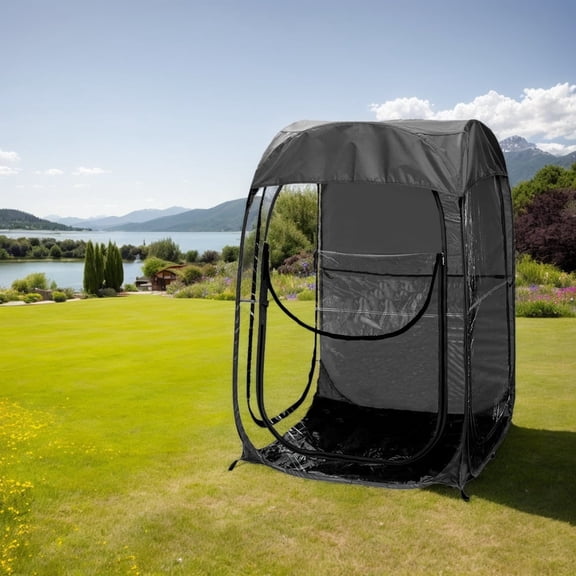
Black Portable Pop Up Sports Tent Instant Setup Weather Shelter Tent Wind Rain Protection Outdoor Canopy for Sports Events Fishing Camping
Clearance Resenkos 15.4'x15.4'x8.5' Waterproof Teepee Camping Tent, with Porch Area, Floor and Carry Bag, for Outdoor Hiking, Blue $91.30
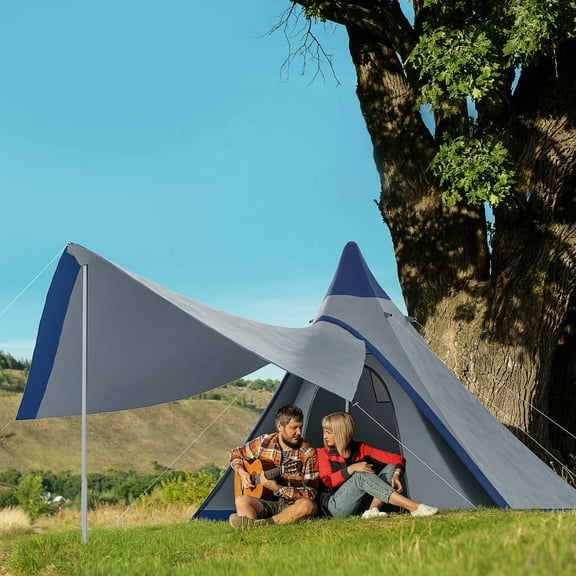


Resenkos 15.4'x15.4'x8.5' Waterproof Teepee Camping Tent, with Porch Area, Floor and Carry Bag, for Outdoor Hiking, Blue
Outsunny Teepee Tent Waterproof Camping Tent with Stove Jack for 4-6 People for Outdoor Camping Hiking Army Green $189.99

Outsunny Teepee Tent Waterproof Camping Tent with Stove Jack for 4-6 People for Outdoor Camping Hiking Army Green
4 Season Inflatable Camping Tent with Canopy & Skylight, 4-6 Person 420D Oxford Waterproof Air Tent, Mesh Windows Doors, Beige


4 Season Inflatable Camping Tent with Canopy & Skylight, 4-6 Person 420D Oxford Waterproof Air Tent, Mesh Windows Doors, Beige
Simple Elements Teepee Tent Event Décor, Foldable Tent for Boho and Western Themed Events, Weddings, Gender Reveal Parties – 47”W x 47”L x 65”H – Pink $74.99
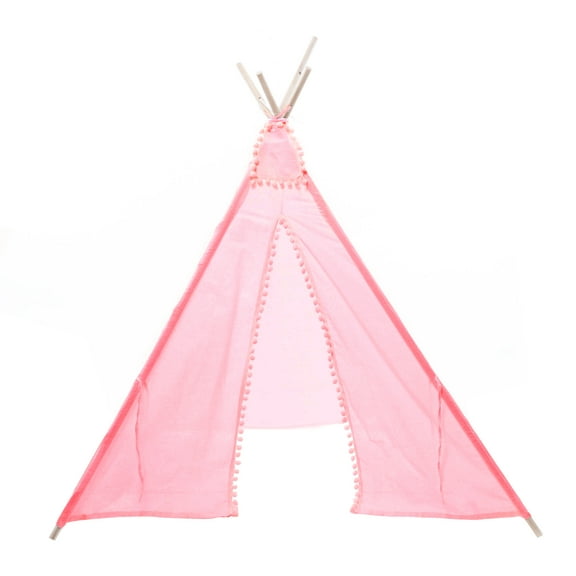


Simple Elements Teepee Tent Event Décor, Foldable Tent for Boho and Western Themed Events, Weddings, Gender Reveal Parties – 47”W x 47”L x 65”H – Pink
xhyhwyd Inflatable Spray Booth 26x14.4x9.5 ft Portable Inflatable Paint Booth Tent with Air Filter System for DIY Spray Car Parts Painting Motorcycle (Blowers Excluded) $495.99
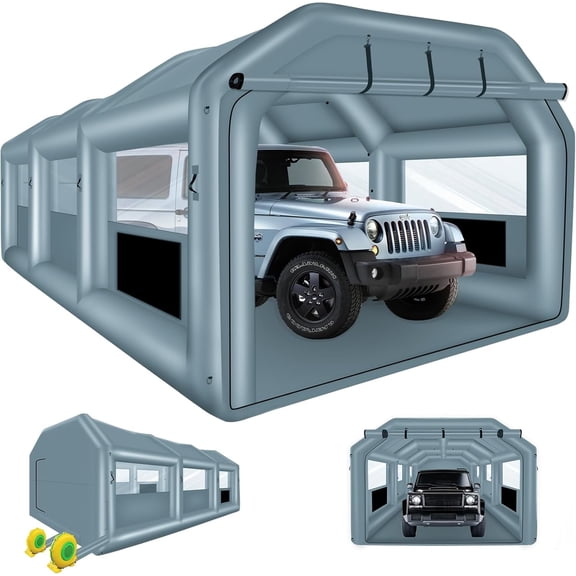


xhyhwyd Inflatable Spray Booth 26x14.4x9.5 ft Portable Inflatable Paint Booth Tent with Air Filter System for DIY Spray Car Parts Painting Motorcycle (Blowers Excluded)
4 Season Pyramid Tent - Portable Cotton Canvas Teepee for Camping, Hiking & Outdoor Adventures - Heavy Duty UV Protection & All Weather Shelter $199.00

4 Season Pyramid Tent - Portable Cotton Canvas Teepee for Camping, Hiking & Outdoor Adventures - Heavy Duty UV Protection & All Weather Shelter
Walmeck 10.5' x 5.2' Camping Tent with Jack Teepee Tent for Family Camping Backpacking Hiking $103.47

Walmeck 10.5' x 5.2' Camping Tent with Jack Teepee Tent for Family Camping Backpacking Hiking
Top rated for ease of setup Coleman Sundome 6-Person Dome Tent, Green, 72" Center Height, Overall dimensions: 120'' H x 120'' W $116.00
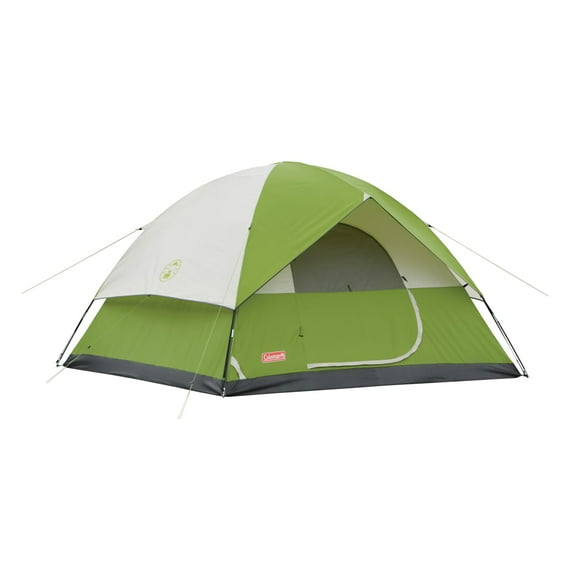
Coleman Sundome 6-Person Dome Tent, Green, 72" Center Height, Overall dimensions: 120'' H x 120'' W
CORE 10' x 9' 6 Person Blockout Dome Camping Tent, 21lbs $229.99
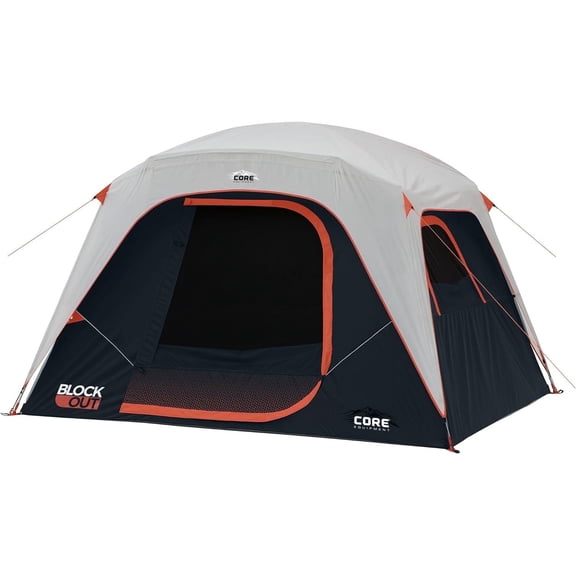
CORE 10' x 9' 6 Person Blockout Dome Camping Tent, 21lbs
Waldmate 4-Person Hot Tent with Stove Jack Snow Skirt Windproof Waterproof,Easy to Install&Carry for Outdoor Camping in Cold Weather $91.19


Waldmate 4-Person Hot Tent with Stove Jack Snow Skirt Windproof Waterproof,Easy to Install&Carry for Outdoor Camping in Cold Weather
Teepee Tent 15.4' Camping Tent, Waterproof 2-3 Person Teepee with Porch, Floor & Carry Bag, Outdoor Backpacking Hiking Coffee $122.06

Teepee Tent 15.4' Camping Tent, Waterproof 2-3 Person Teepee with Porch, Floor & Carry Bag, Outdoor Backpacking Hiking Coffee
Latourreg Portable Double Layers Indian Teepee Tent Camping Tipi Tent without Center Pole for 2 Persons $99.00
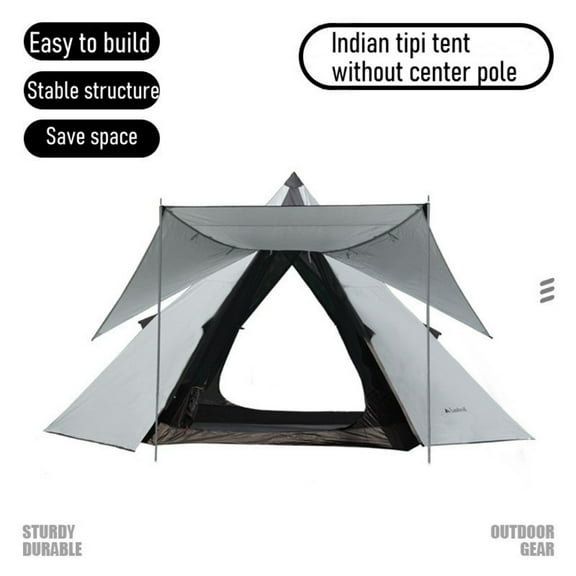
Latourreg Portable Double Layers Indian Teepee Tent Camping Tipi Tent without Center Pole for 2 Persons
Camping Tent 2 Person, Backpacking Tent Waterproof & Windproof, Ultralight Instant Tent with Rain Fly for Camping, Hiking, Outdoor $122.99


Camping Tent 2 Person, Backpacking Tent Waterproof & Windproof, Ultralight Instant Tent with Rain Fly for Camping, Hiking, Outdoor
4-6 Person Canvas Hot Tent with Stove Pipe Jack - Lightweight Winter Tipi for Camping, L Size 4 Season Waterproof Hiking Fishing Shelter $171.46 Was $199.97
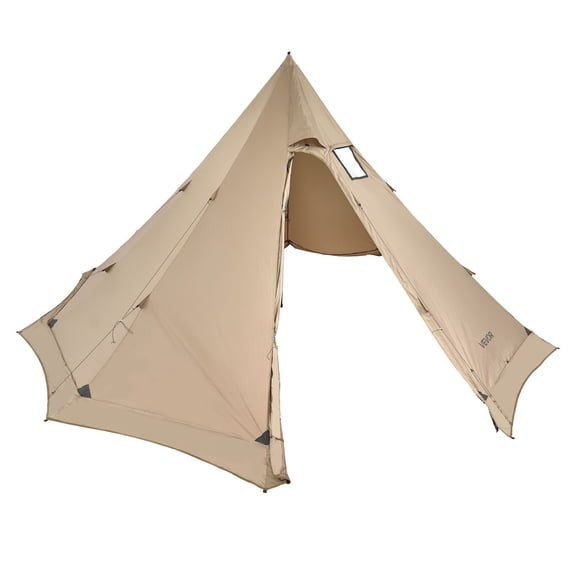
4-6 Person Canvas Hot Tent with Stove Pipe Jack - Lightweight Winter Tipi for Camping, L Size 4 Season Waterproof Hiking Fishing Shelter
Portable Outdoor Bubble Tent 47x47 Inch Clear Pop-Up Igloo with Waterproof Cover & Mat - Instant Shelter for 1 Person, Perfect for Camping, Events, Fishing & Cheering $45.74
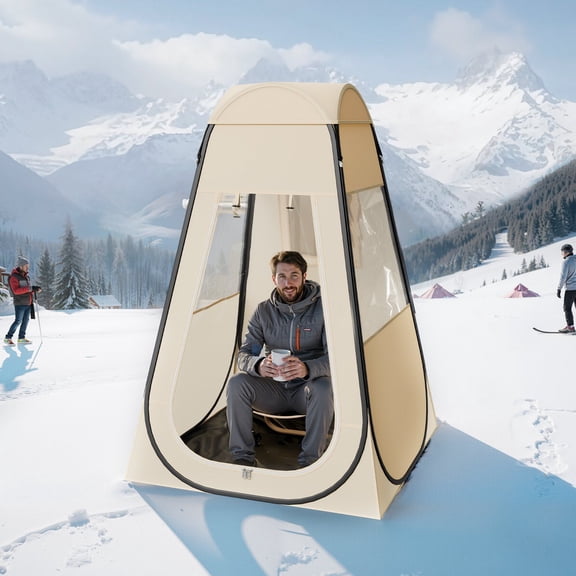
Portable Outdoor Bubble Tent 47x47 Inch Clear Pop-Up Igloo with Waterproof Cover & Mat - Instant Shelter for 1 Person, Perfect for Camping, Events, Fishing & Cheering
150D Oxford Double Layer A-shaped Tent Lightweight 4 Season Camping Tent PU2000mm Waterproof and Sunburn Protection $99.00

150D Oxford Double Layer A-shaped Tent Lightweight 4 Season Camping Tent PU2000mm Waterproof and Sunburn Protection
Demi Bonn 15.4'x15.4'x8.5' 2-3 Person Waterproof Teepee Camping Tent, with Porch Area, Floor & Carry Bag for Outdoor Activities, Brown $113.92
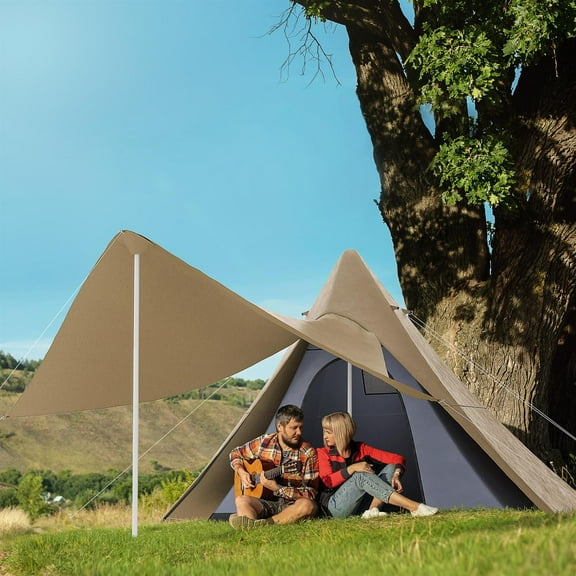
Demi Bonn 15.4'x15.4'x8.5' 2-3 Person Waterproof Teepee Camping Tent, with Porch Area, Floor & Carry Bag for Outdoor Activities, Brown
Ozark Trail Crystal Caverns 10-Person Festival Tent, with 2 Entrances $179.00
Ozark Trail Crystal Caverns 10-Person Festival Tent, with 2 Entrances
Bell Tent with Stove Jack, Cotton Canvas Glamping Tent, Spacious Yurt for Groups, Outdoor Camping Hunting Party Family Teepee 5M $289.99

Bell Tent with Stove Jack, Cotton Canvas Glamping Tent, Spacious Yurt for Groups, Outdoor Camping Hunting Party Family Teepee 5M
2-Person Hot Tent with Stove Jack - Waterproof Winter Cabin Tent Shelters, 4 Season Design with Fireproof Ground Mat and Poles for Outdoor Camping Activities $137.74


2-Person Hot Tent with Stove Jack - Waterproof Winter Cabin Tent Shelters, 4 Season Design with Fireproof Ground Mat and Poles for Outdoor Camping Activities
Outdoor Waterproof 4-Season Cotton Canvas Yurt Tent 5M/16.4ft Bell Tent With Stove Hole (Side Wall), For Family Glamping $559.00

Outdoor Waterproof 4-Season Cotton Canvas Yurt Tent 5M/16.4ft Bell Tent With Stove Hole (Side Wall), For Family Glamping
Kadahis Tipi Hot Tent with Fire Retardant Stove Jack for Flue Pipes, 4~6 Person, 20D Nylon Coated Silicone Waterproof 4000mm, Lightweight, Teepee Tents for Family Team Outdoor Camping Hiking $199.99

Kadahis Tipi Hot Tent with Fire Retardant Stove Jack for Flue Pipes, 4~6 Person, 20D Nylon Coated Silicone Waterproof 4000mm, Lightweight, Teepee Tents for Family Team Outdoor Camping Hiking
300D Oxford Outdoor Arabic Canvas Family Tent Teepee Yurt Glamping Tent Hike Picnic Camping Beach Wedding Waterproof
300D Oxford Outdoor Arabic Canvas Family Tent Teepee Yurt Glamping Tent Hike Picnic Camping Beach Wedding Waterproof
15.4'x15.4'x8.5' Teepee Tent, Waterproof Camping Tent with Porch Area, Floor and Carry Bag, for 2-3 Person Outdoor Backpacking Camping Hiking, Coffee $133.99

15.4'x15.4'x8.5' Teepee Tent, Waterproof Camping Tent with Porch Area, Floor and Carry Bag, for 2-3 Person Outdoor Backpacking Camping Hiking, Coffee
6.8x4.9FT Light Gray Arched Bicycle Storage Shed, 210D PU Silver Coated Oxford, Black Fiberglass Rod Frame, Front&Side Dual Doors, Inner Storage Bag & Portable Carry Bag $57.28

6.8x4.9FT Light Gray Arched Bicycle Storage Shed, 210D PU Silver Coated Oxford, Black Fiberglass Rod Frame, Front&Side Dual Doors, Inner Storage Bag & Portable Carry Bag
Tent,Stove Tent 5.2' Tent With X 5.2' Tent 10.5' X 5.2' Buzhi Tent 10.5' Adben Dsfen Papapi Iuppa $106.74
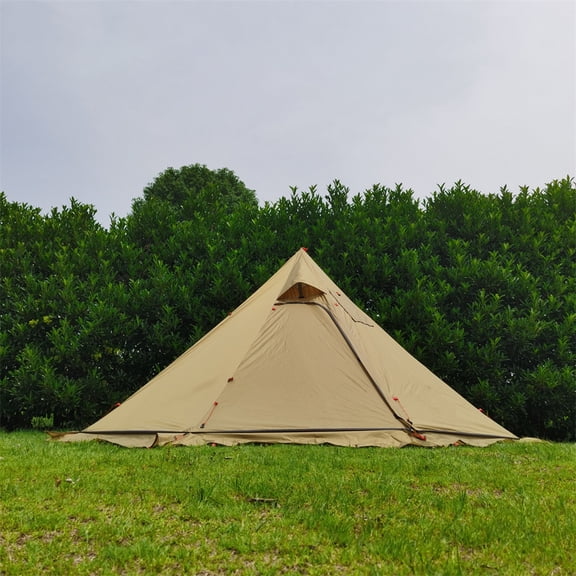


Tent,Stove Tent 5.2' Tent With X 5.2' Tent 10.5' X 5.2' Buzhi Tent 10.5' Adben Dsfen Papapi Iuppa
About Best Camping & Teepee Tents for Kids & Families - Walmart.com
Ready to elevate your Independence Day celebrations or camping escapes? Discover teepee tents at Walmart that bring fun, comfort, and versatile shelter to both backyard gatherings and nature adventures. Whether you're planning a family BBQ, creating a cozy play zone for kids, or heading out for a festive sleepover, there's a tent suited for every occasion.
- Discovery Made Easy: Explore a wide selection of teepee tents to match your event size, from intimate play spaces to spacious group shelters, helping you quickly find the best fit for your holiday or outdoor activities.
- Confident Comparisons: Compare designs featuring breathable fabrics, mesh windows, and built-in floors so you can choose a model that supports sun protection and airflow during summer festivities.
- Setup Simplified: Quick-assembly options save you time on party prep, letting hosts and families focus on making memories rather than reading instructions.
- Comfort All Weekend: Enjoy roomy interiors, privacy features, and blackout tents for restful evenings or daytime lounging—keeping everyone relaxed during July 4th and throughout the summer.
- Portable Convenience: Foldable tents and included carry bags make transporting your shelter easy, so your plans can move from backyard to park or campsite seamlessly.
- Lasting Value: Durable materials offer season-long enjoyment, while easy cleaning and storage features ensure your tent is ready for every adventure ahead.
Browse Walmart's teepee tent selection to find the right match for your July 4th vision and build summer traditions with ease. Enjoy simple setup, reliable comfort, and festive versatility for every outdoor adventure.
Popular in Best Camping & Teepee Tents for Kids & Families - Walmart.com
FAQ
How do I pick the right size teepee tent?
When choosing a teepee tent, start by checking the size of your group and how you'll use the tent—sleeping, lounging, or hosting guests. Consider floor space and height: larger tents can fit families or groups, while smaller designs work great for kids or cozy setups. Also look at the tent's layout and how much furniture, gear, or decorations you want inside. Measuring your available area before you shop can help you find the best fit for your backyard, campsite, or indoor plans. Walmart offers a variety of sizes to match your needs for summer fun and 4th of July celebrations.
Can teepee tents handle summer heat and rain?
Many teepee tents are designed with weather-resistant materials that help protect against sun, wind, and light rain during summer events. Look for options with waterproof fabrics, UV protection, and mesh windows for improved airflow. For backyard parties or camping trips, tents with sturdy frames and built-in floors can add comfort and keep moisture out. Still, always check product descriptions for specific weather capabilities and avoid setting up in extreme conditions. Planning ahead lets you enjoy your tent throughout the season, whether you’re lounging during the day or stargazing at night.
What makes teepee tents easy to set up?
Most teepee tents feature quick setup systems like pop-up frames or simplified pole designs, so you don’t have to spend lots of time with instructions. Some include detailed assembly guides and carry bags for hassle-free transport. For busy hosts, tents with less parts and color-coded connectors make setup smoother, especially if you’re prepping for a party or moving between locations. Placing the tent on level ground and following manufacturer recommendations can help speed things up. Walmart’s selection includes models for all experience levels, so you can focus on enjoying your gathering rather than wrestling with setup.
How should I clean my teepee tent after an event?
Caring for your teepee tent keeps it ready for the next holiday or backyard hangout. After use, shake out loose debris and gently sweep crumbs or dirt. Most tents can be spot-cleaned with a damp cloth, while some polyester styles handle mild soap and water. Let it air dry completely before storing in the carry bag to help avoid mildew. Don’t forget to wipe connectors and poles if needed, and always check care instructions provided by the manufacturer. Keeping your tent clean extends its life and makes summer prep easier.
Can kids safely play inside teepee tents outdoors?
Teepee tents made for kids use soft materials and stable construction to create cozy play spaces for outdoor festivities. Safety tips: set up the tent away from grilling areas, open flames, or sparklers; keep entryways clear for easy access, and use built-in mats or breathable fabrics for comfort. If your tent has mesh windows, leave them open on warm days for airflow. Always supervise children during events and follow instructions for assembly and use. With a little planning, teepee tents can provide safe, inviting spaces for memorable playtime during holidays and family gatherings.