

Hay Elevators in Tractor Implements
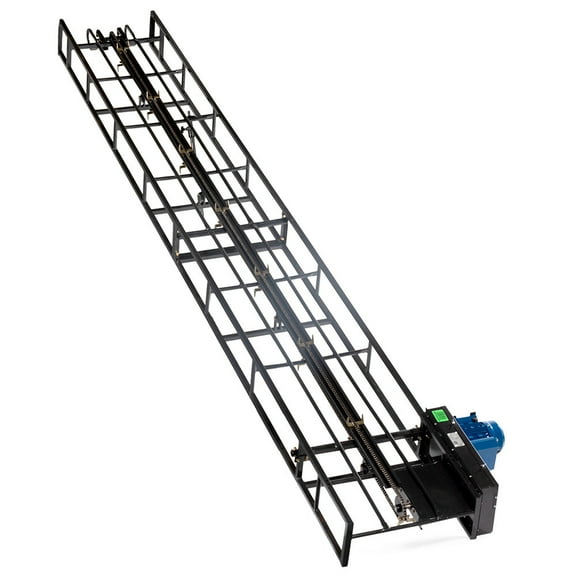


About Hay Elevators in Tractor Implements - Walmart.com
You use a hay bale elevator to move bales from wagon height to loft storage with steadier lifting and less repeated handling. You can compare reach, power source, chain setup, and parts support before choosing equipment for your barn layout.
Choosing the right hay bale elevator
Start with the lift height you need, because your barn loft and unloading point set the working angle. You should measure floor-to-loft reach first, then compare whether 16 ft, 20 ft, or 24 ft fits your setup.
A shorter length can suit lower mow openings and tighter sheds where you need simpler positioning. A longer frame can help you reach taller lofts while keeping bale flow more controlled along the incline.
You should also match the unit to your bale size and expected weight, because chain tensile strength affects how confidently you move dense loads. You may also compare motor horsepower, since added output can help maintain steady movement during heavier hay handling.
- You can reduce repeated lifting when you move square bales from the wagon to the loft.
- You can keep unloading moving with a consistent incline matched to your barn height.
- You can replace worn components instead of changing your whole setup.
- You can choose power options that fit your barn access and work style.
How to compare lengths, power, and chain types
When you compare lengths, you should think about both vertical reach and the space needed at the base. You may find a 16 ft model easier to position, while 20 ft or 24 ft lengths can serve taller storage areas.
Power source changes how you set up your work area and how much mobility you keep. You can choose an electric motor when your barn has nearby power, or consider a gas engine when you need field-to-barn flexibility.
If you prefer simpler operation, you may also compare manual options for lighter use and smaller loads. You should check whether your usual bale volume matches the slower pace of manual feeding.
Chain type is another key decision because it affects how bales travel and how you maintain the conveyor. You can compare single chain designs for straightforward setups, while double chain designs may offer more contact across wider loads.
When you need repairs, replacement link options can help you restore movement without replacing every major component. You should verify compatibility with your existing drive and frame before selecting any replacement chain section.
What to look for in complete units and replacement parts
You can shop this category as a full system or as individual components, depending on what your current setup needs. You may want a complete unit when you're building a hay handling line from the ground up.
If your frame still fits your barn, you might only need replacement parts to get back to working order. You can compare chains, drive pieces, motors, and hay chute components based on the exact section showing wear.
A hay chute matters when you want cleaner bale guidance at the discharge point near the loft opening. You should look for a chute style that matches your bale path and helps direct each load where you need it.
You should also check setup details like transport carriage design, wheel placement, and overall storage footprint. These points matter when you move equipment between sheds or store it after the harvest season.
Assembly effort can vary with frame length, motor style, and the number of moving parts you install. You may prefer a layout that lets you position, raise, and store the unit with fewer steps.
Using hay bale elevator options for real farm setups
For smaller barns, you may pair a 16 ft unit with an electric motor when power is close and loft height is modest. You can keep the base area compact while still moving bales upward in a steady line.
For taller haymows, you may need a 20 ft or 24 ft frame to reach the opening without a steep feeding angle. You should compare that reach with your wagon position so bales enter the chain path smoothly.
If you unload in areas without nearby outlets, a gas engine can give you more placement flexibility around the barnyard. You can set the elevator where access works for your trailer, wagon, or stacked pickup area.
When your current conveyor only needs maintenance, replacement parts can make more sense than changing the entire frame. You should match links, motor requirements, and component dimensions to your existing equipment before ordering.
You may also keep a replacement link or extra chain section ready for seasonal upkeep during heavy use periods. That approach can help you keep your hay handling routine organized when timing matters during storage days.
With the right hay bale elevator, you can match loft height, bale weight, and power access without guessing through the setup. You gain a clearer path to smoother loading, steadier bale travel, and more organized barn storage.