

Hall Trees
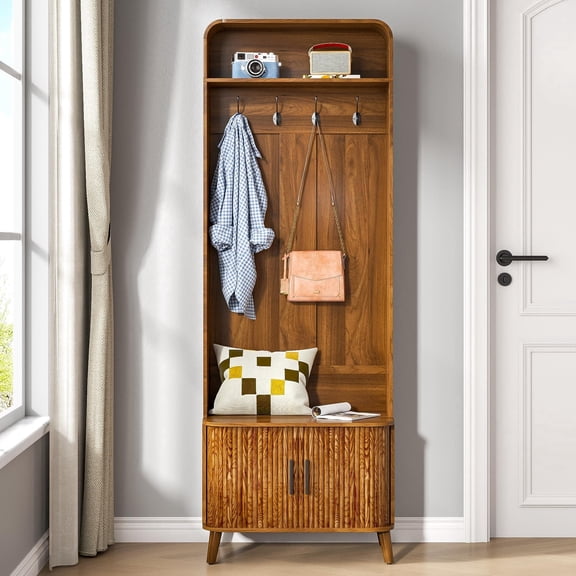
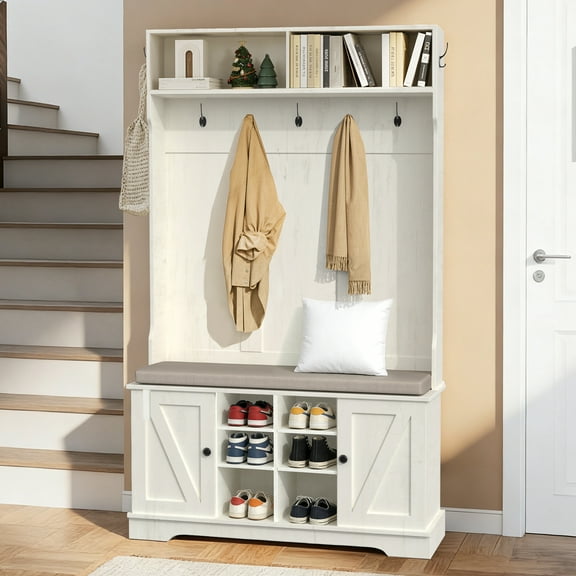
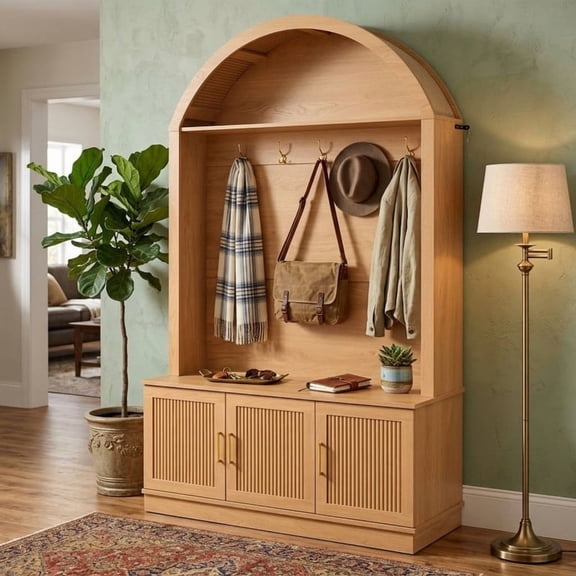

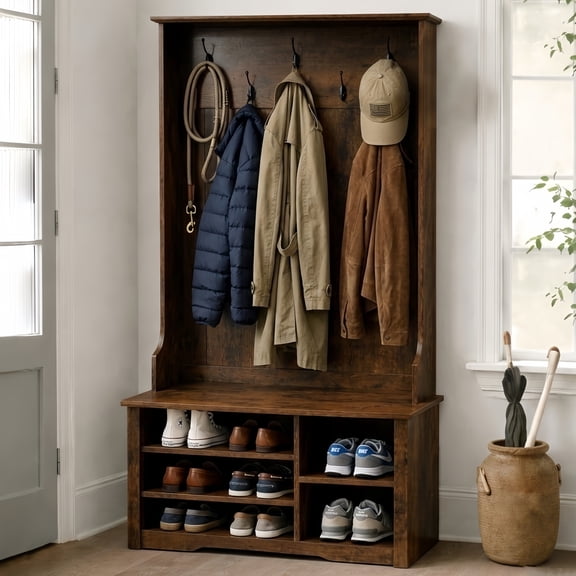









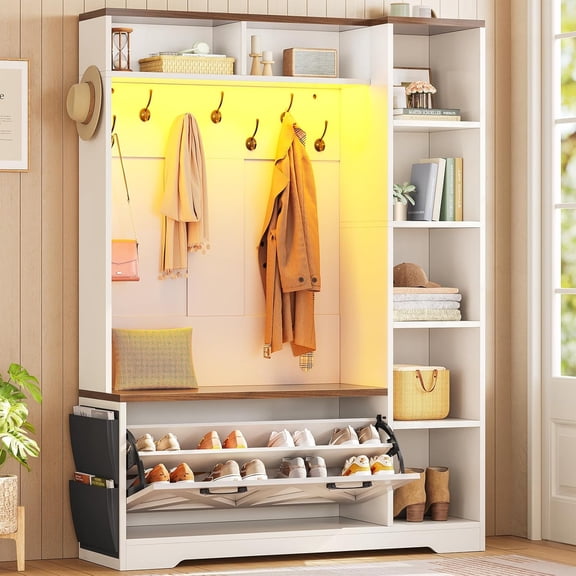


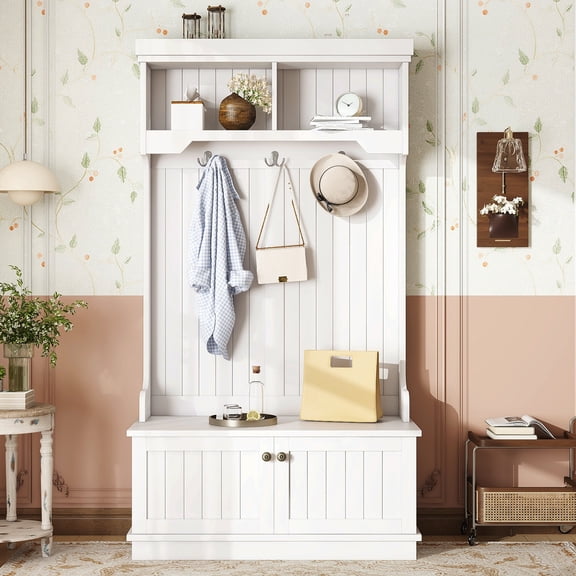
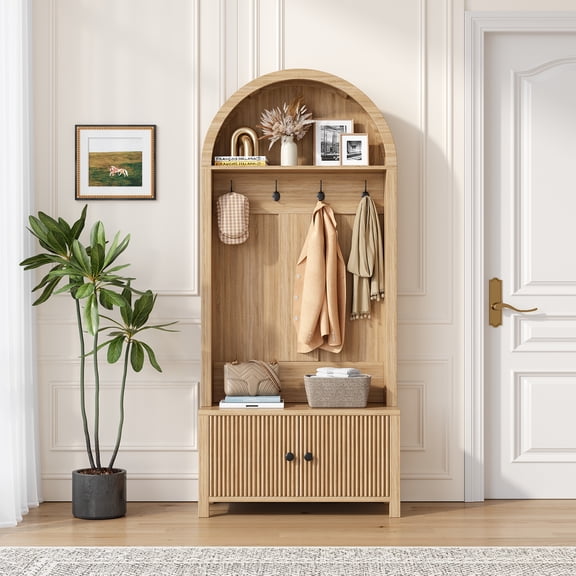
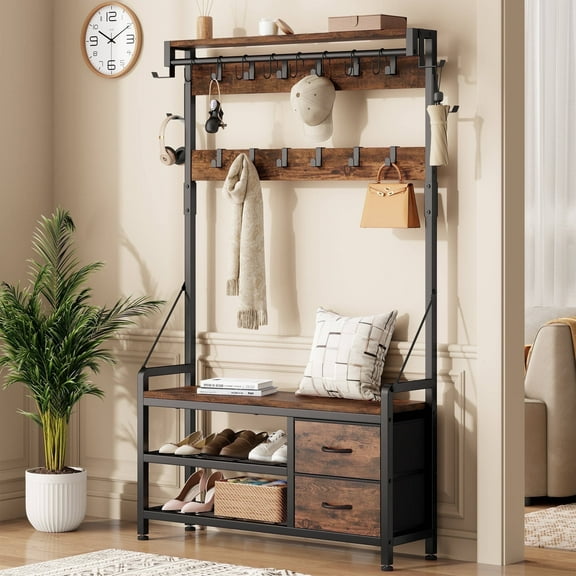


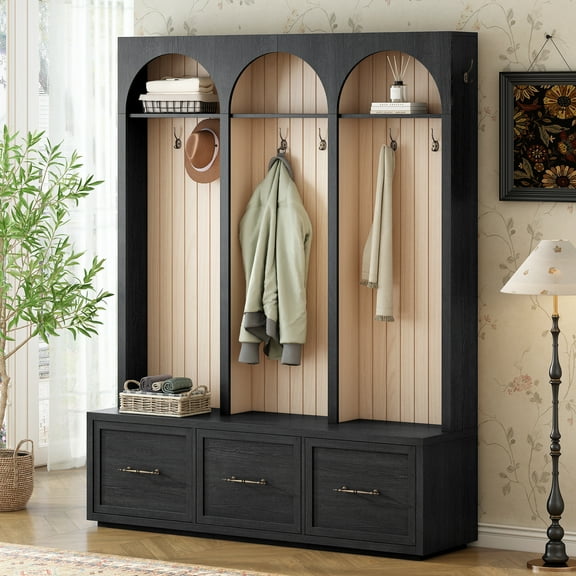


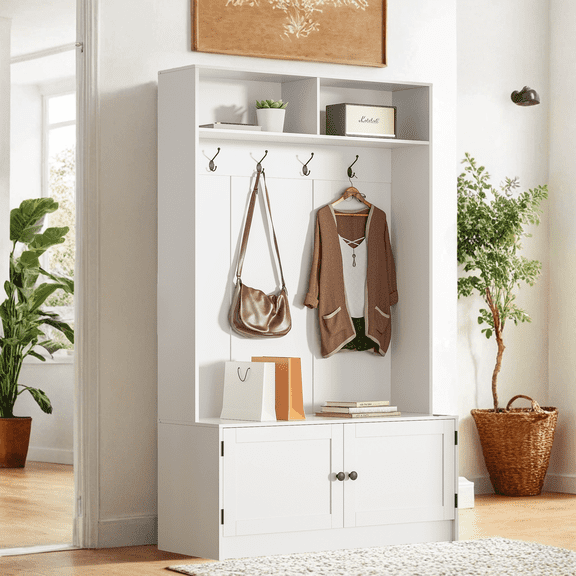


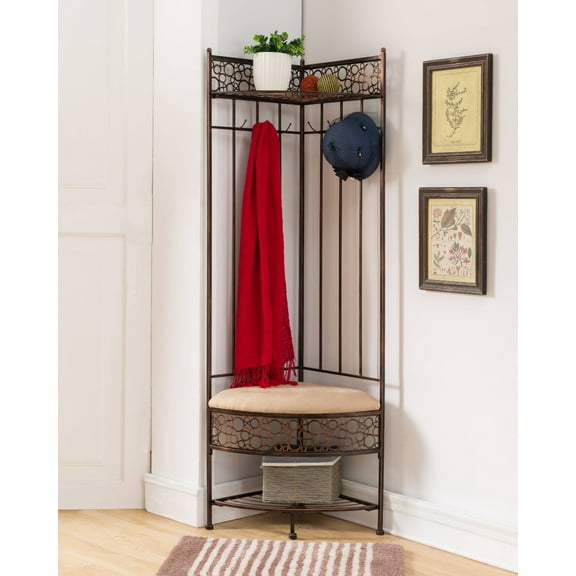
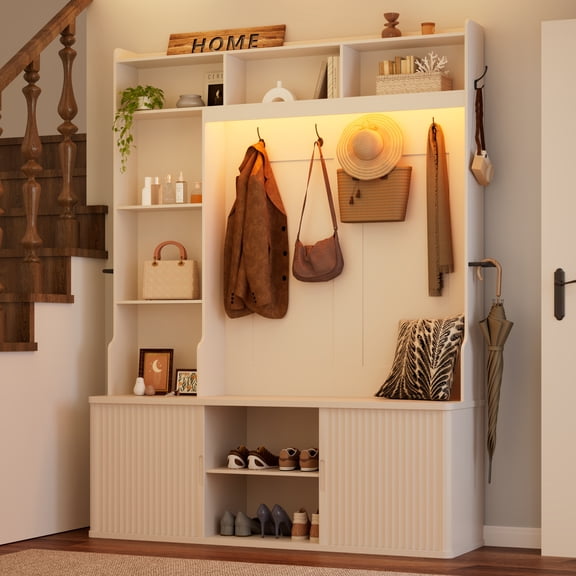


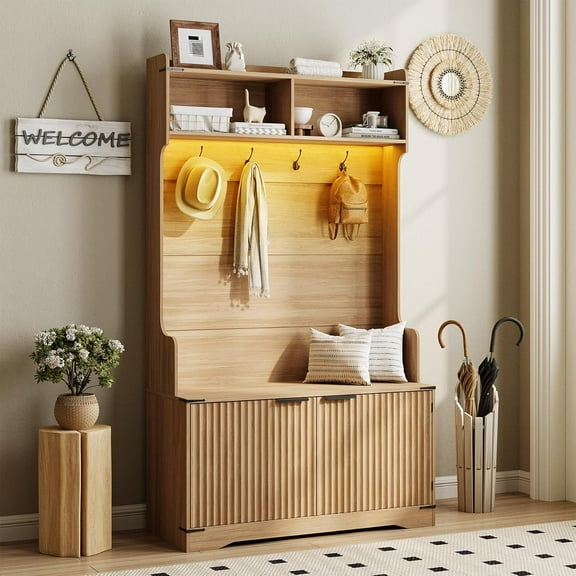
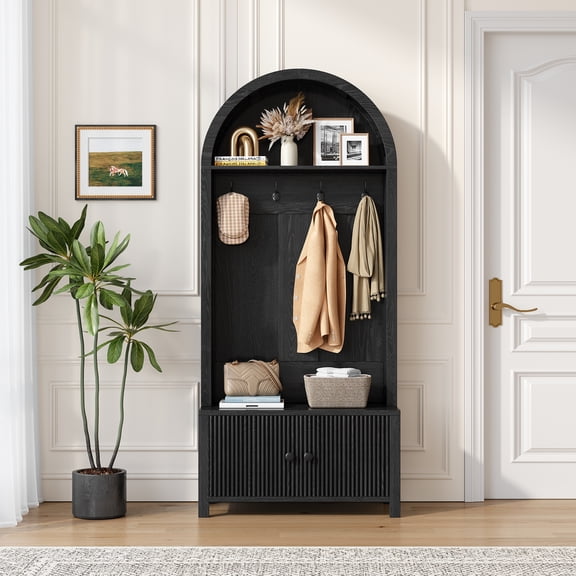
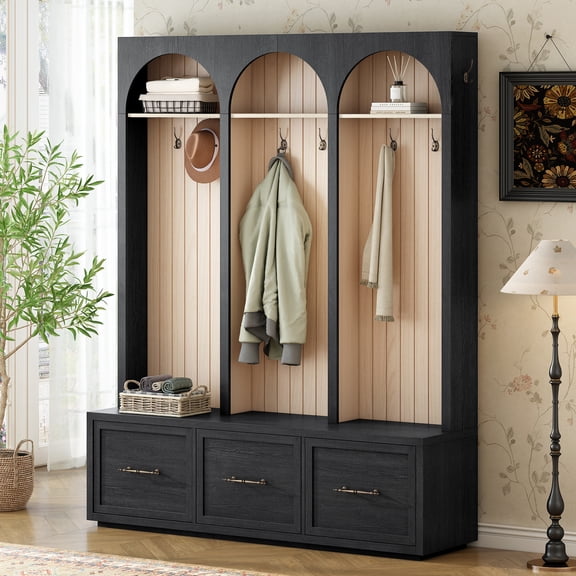
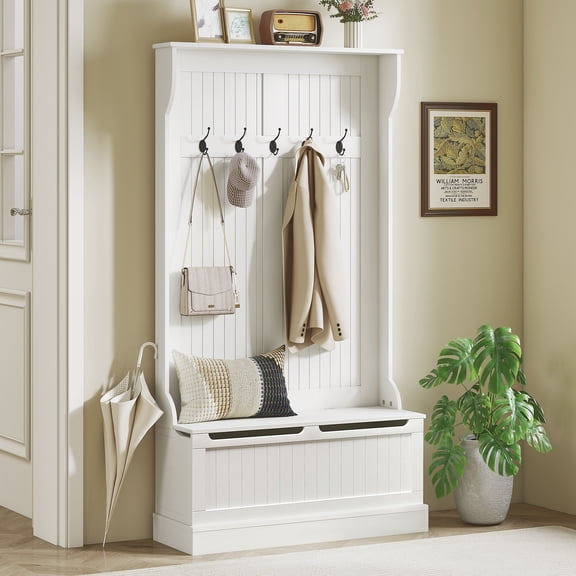




















About Hall Trees - Walmart.com
Hall trees help you organize coats, shoes, and bags in one spot. A well-chosen entryway hall tree gives you seating, hooks, and storage without crowding your doorway.
Busy entries need furniture that handles daily drop-zone clutter. Clear structure helps you compare bench options, corner layouts, and storage features that match your routine.
Choosing hall trees for your space
Start with your wall width, depth, and ceiling clearance before you compare styles. Accurate measurements help you avoid blocked doors, tight walkways, and awkward bench placement.
Corner layouts work well when you want to use an unused angle. Flat-wall designs suit longer entry walls where you need a wider landing zone.
Freestanding pieces let you reposition your setup when your room changes. Wall-mounted options keep the floor more open when you prefer a lighter footprint.
Your household traffic should guide the size you choose. Narrow profiles fit slimmer halls, while wider units support shared storage near the door.
How to compare a hall tree with bench
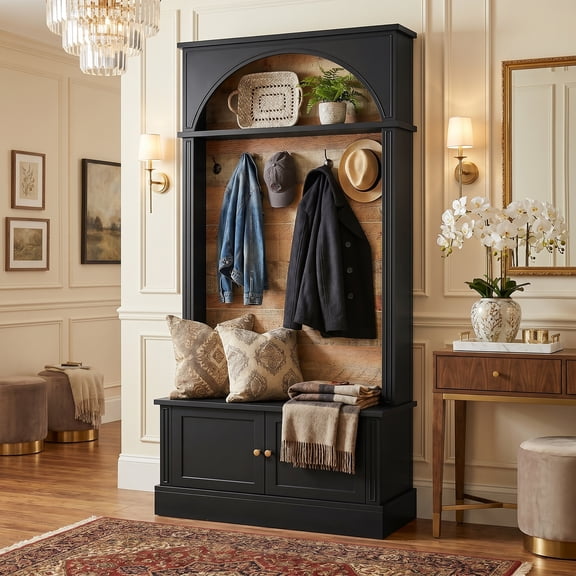
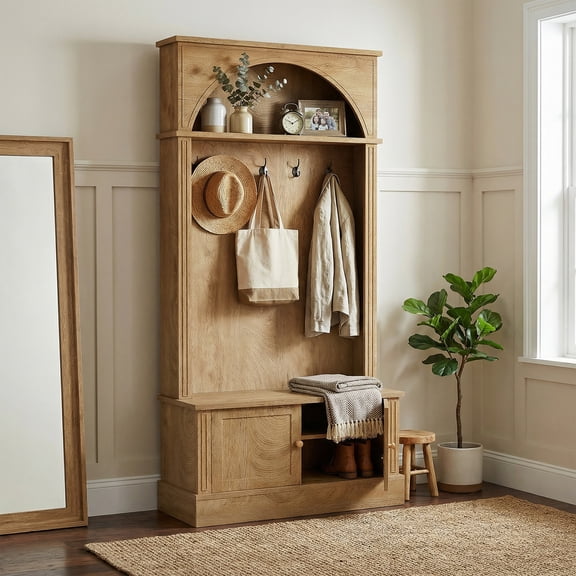
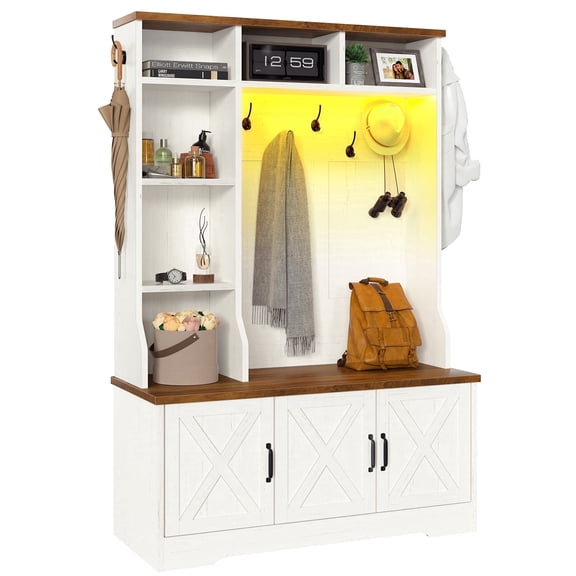
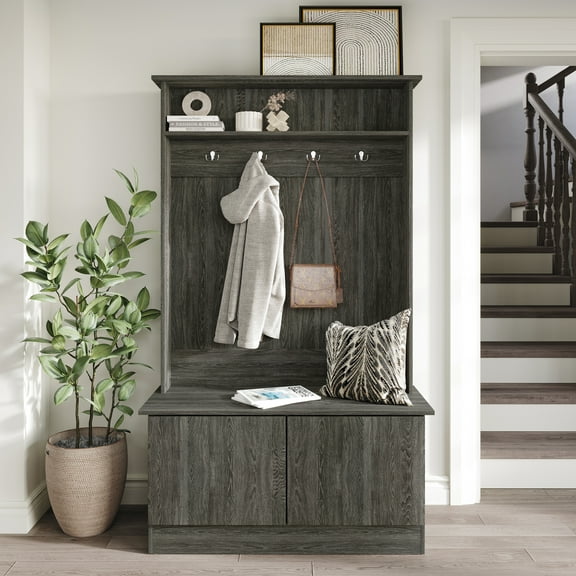
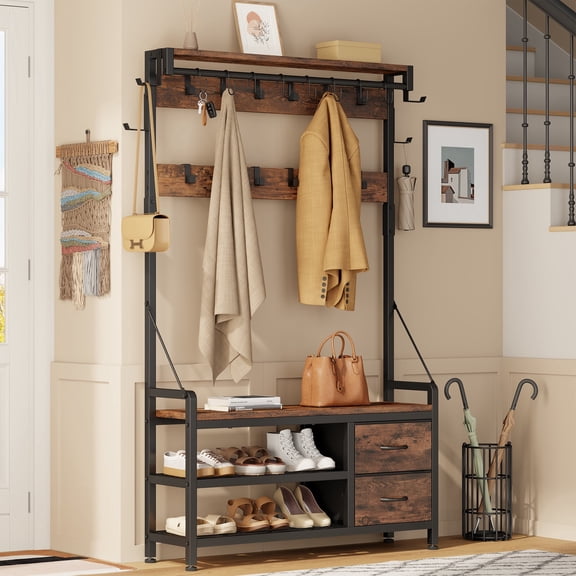
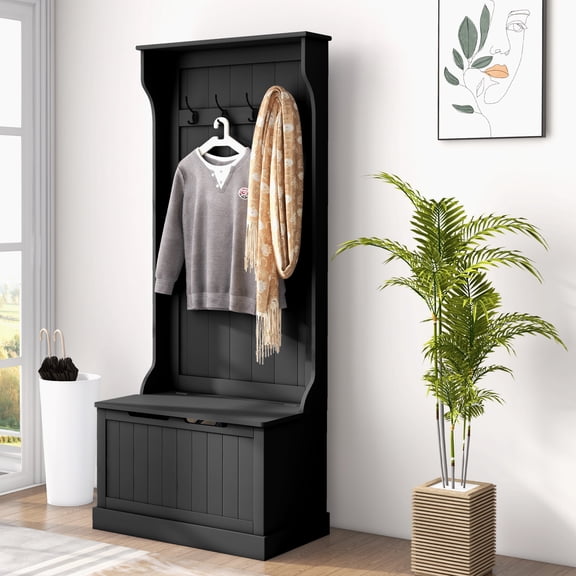
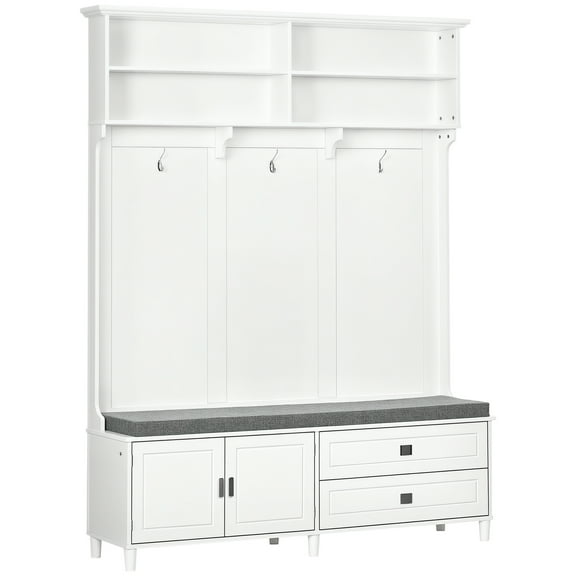
A hall tree with bench gives you a place to sit while you change shoes. Built-in storage also keeps backpacks, hats, and leashes closer to your usual exit point.
Bench seating matters when your routine starts and ends at the door. Cushioned benches add a softer seat, while hard surfaces often simplify cleanup.
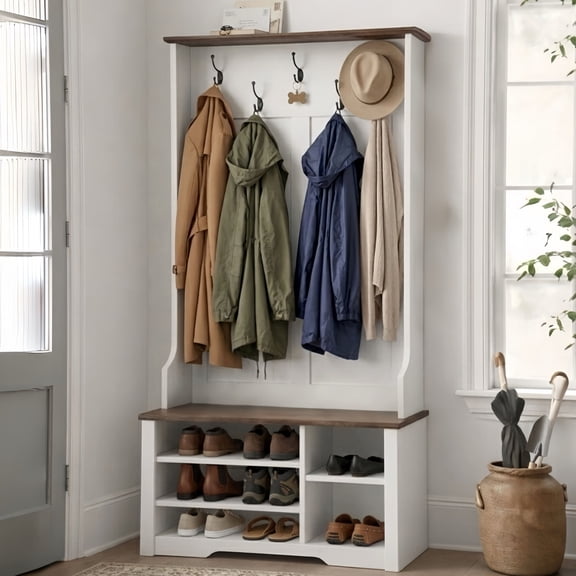
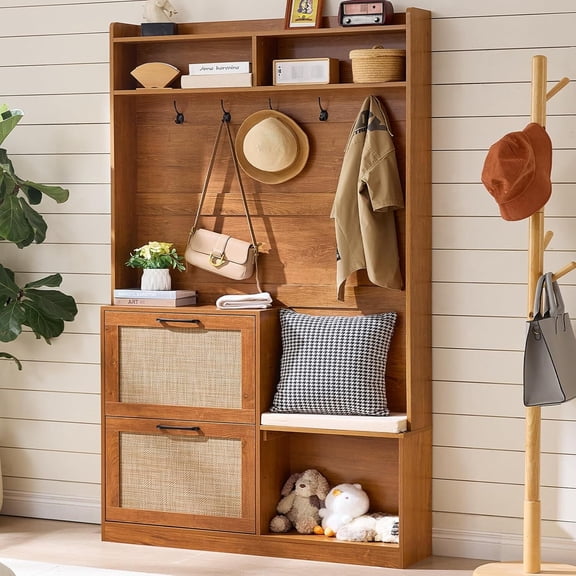
- Your entry can combine seating, hanging space, and shelves in one compact furniture piece.
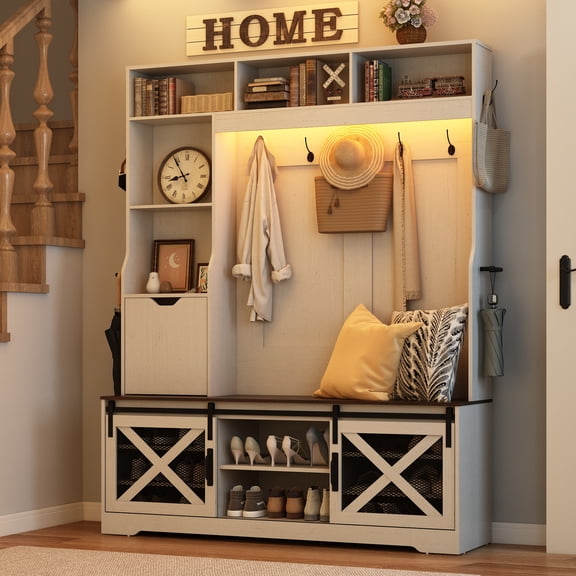
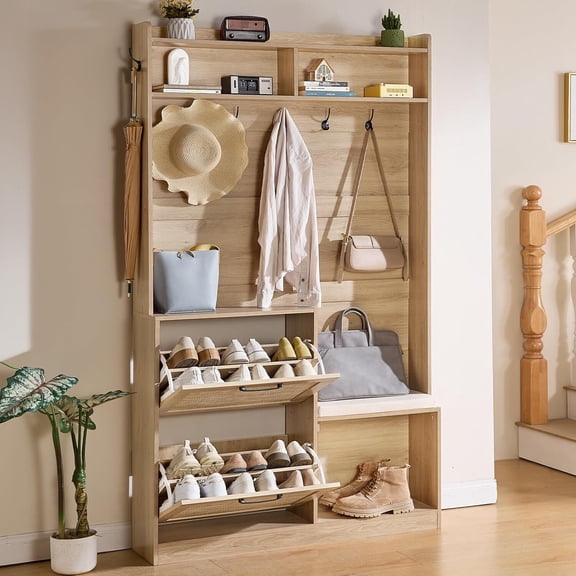
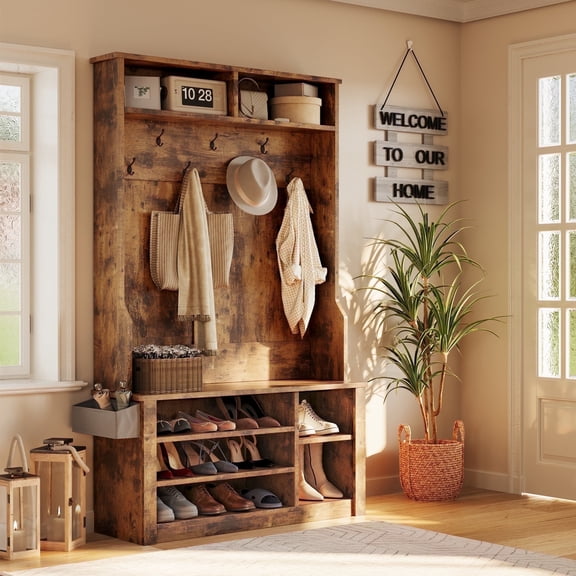
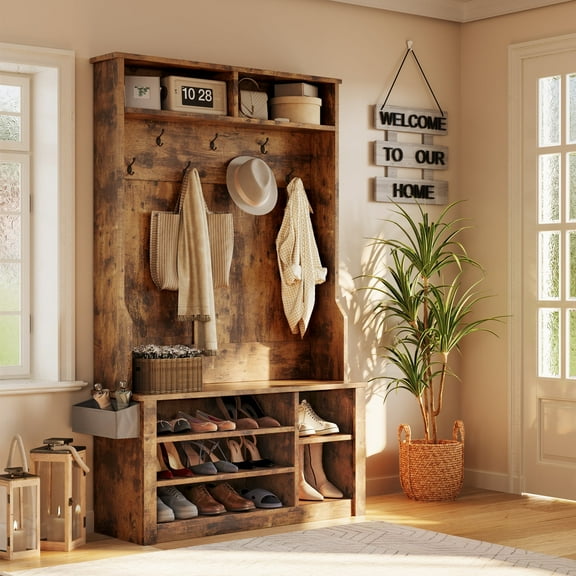
- Your floor can stay clearer when shoe cubbies hold pairs near the door.
- Your daily essentials stay visible when hooks keep coats, bags, and scarves ready.
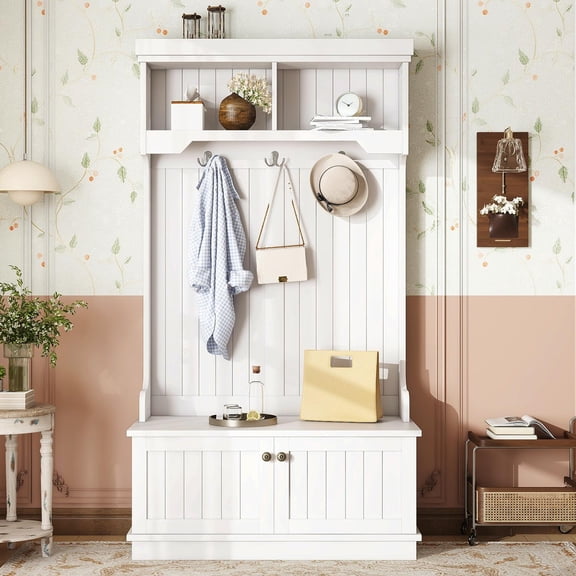
- Your room style stays consistent when finishes match farmhouse, modern, industrial, rustic, or traditional spaces.
Larger households often need more hooks and open cubbies for daily turnover. Smaller households may prefer cleaner lines and enclosed drawers for a tidier look.
Check the bench weight capacity before you plan for daily seating. That limit helps you match the piece to regular shoe changes and everyday use.
What to look for in an entryway hall tree
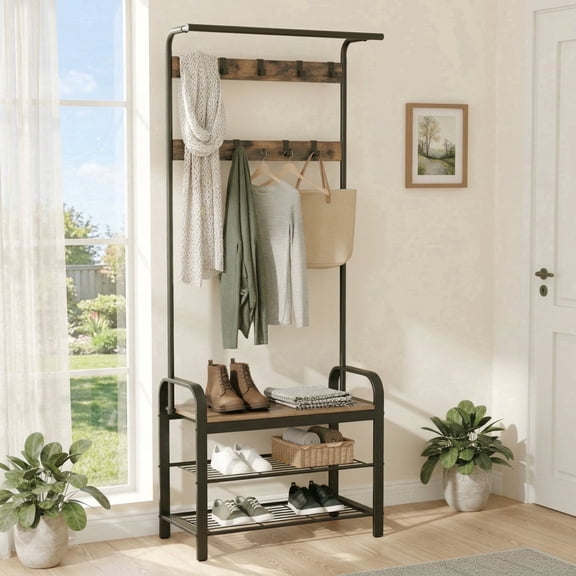
Material choices shape both the look and upkeep in your home. Wood adds warmth, metal looks streamlined, and engineered wood often supports versatile finishes.
Upholstered details can soften the seat and change the overall style. Non-upholstered benches usually make wipe-down care simpler in busy entry areas.
Storage features should match what your household actually drops by the door. Count how many hooks, shelves, drawers, and shoe cubbies your routine requires.
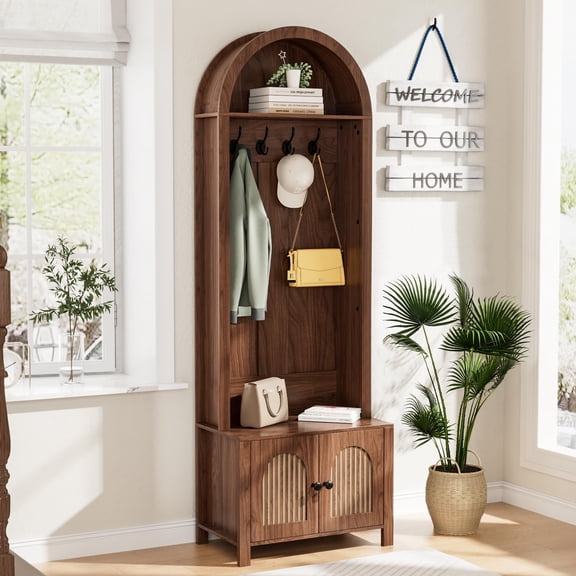
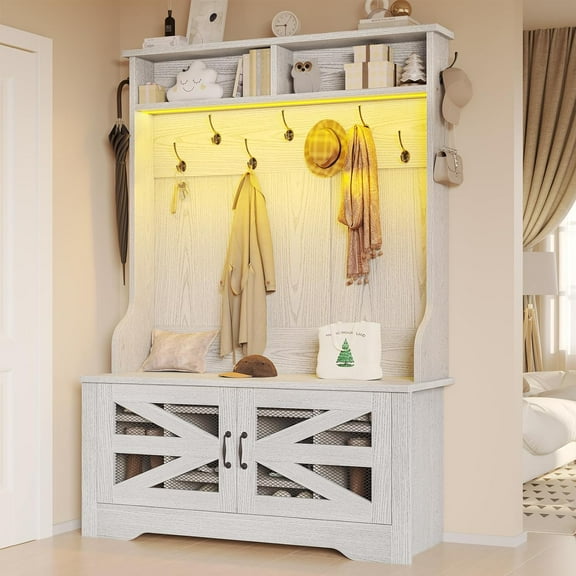
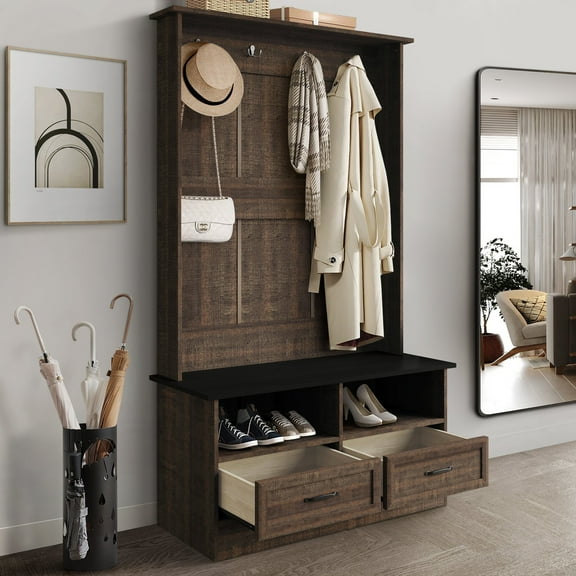
A hall tree storage bench helps you separate open access from tucked-away storage. Shoes can stay below, coats can hang above, and small accessories can sit in drawers.
Wall anchoring matters when you want a steadier setup against the wall. Check whether the manufacturer includes anti-tip kits so your unit secures as intended.
Weight capacity limits also help you compare shelves, hooks, and bench use. Those numbers tell you whether your unit fits coats, bags, baskets, or daily sitting.
How to compare hall tree coat rack configurations
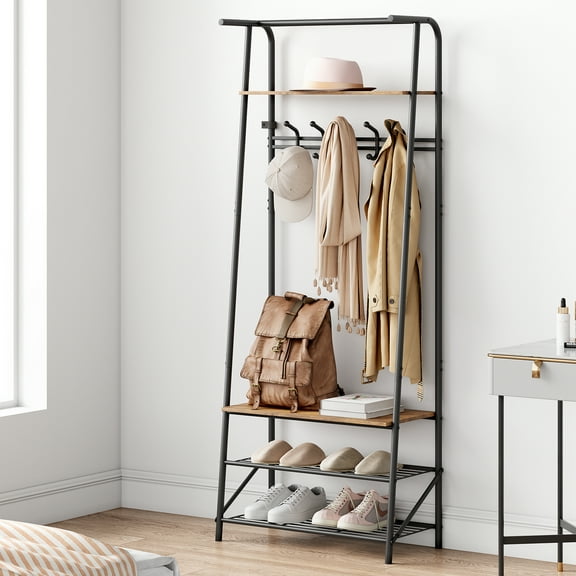
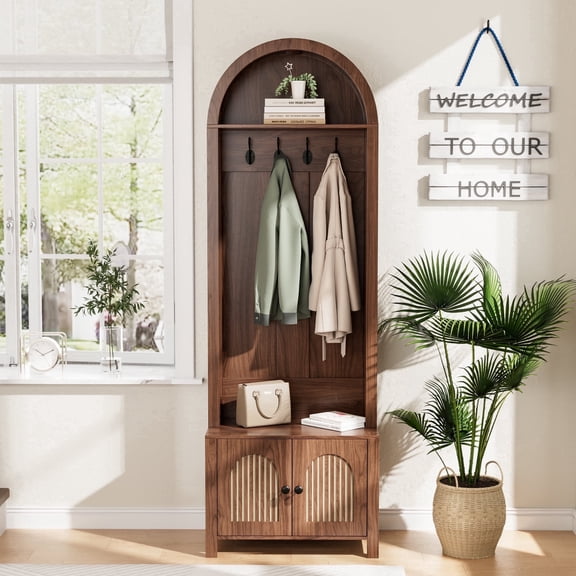
A hall tree coat rack can work differently depending on its shape and footprint. Shallower designs help you keep traffic moving in narrow halls and tighter entries.
An entryway hall tree often fits front doors where you want a polished first impression. A mudroom hall tree often suits garage entries where shoes and outerwear pile up fast.
Corner configurations help you turn an empty nook into active storage. Straight-wall units give you more room for wider benches, added cubbies, or extra hooks.
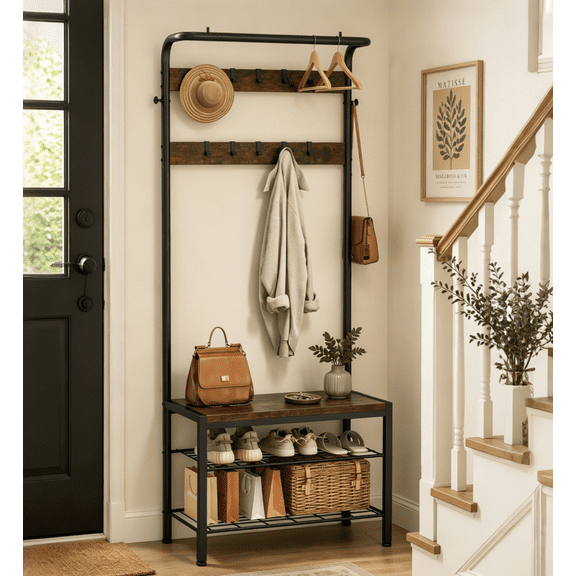
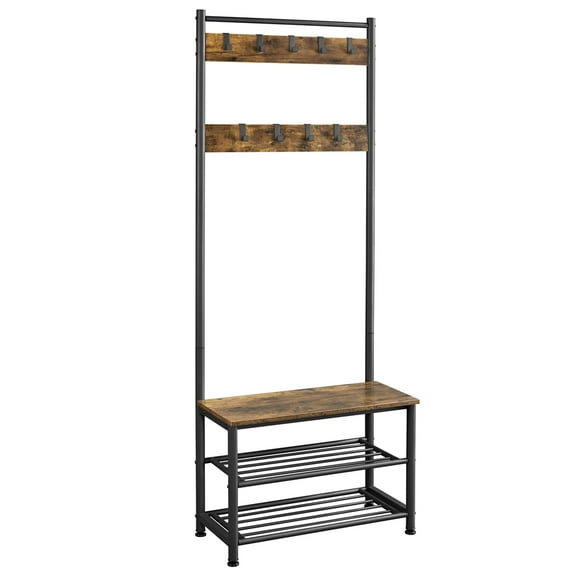
Design style also changes how the piece feels in your room. Farmhouse looks often feature paneled details, while industrial styles mix metal frames with wood tones.
Modern options usually favor clean lines and simpler silhouettes near the door. Traditional and rustic looks can add familiar shapes and warmer finishes to your entry.
Using hall trees in everyday entryway setups
School-day routines often benefit from one hook or cubby per person. That setup helps you keep lunch bags, shoes, and coats easier to find each morning.
Apartment entries often need vertical storage instead of extra floor coverage. Taller units help you use wall height when your doorway area feels tight.
Garage-door drop zones often work well with a mudroom hall tree and bench. That combination gives you a spot for shoes, sports gear, and outer layers.
Guest entries can benefit from a simpler piece without bulky storage below. A slimmer profile gives visitors hooks and a small landing zone without taking over the room.
Frequent movers may prefer freestanding designs that adapt to new layouts. Fixed corners or wall-mounted setups can make more sense when your space stays consistent.
When your measurements, storage needs, and seating plans align, hall trees feel easier to compare. The right configuration helps you keep your entry orderly every day.