

Uniheat(2)
Uniheat 10 Pack 72 Hour Heat Pack - for Baby Chicks, Plants, Fish and Retiles $30.75
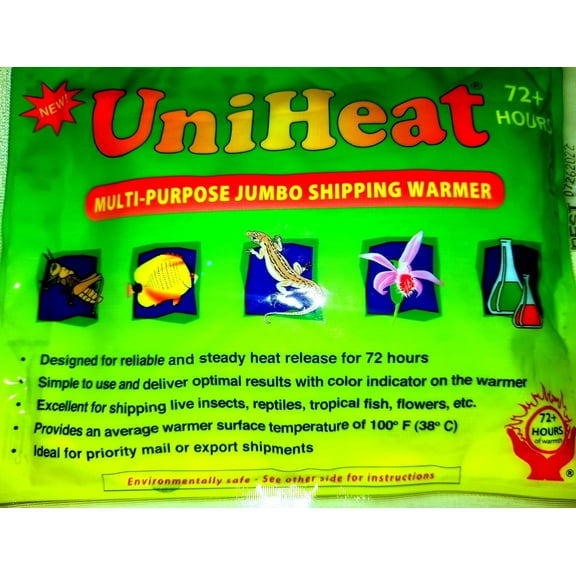
Uniheat 10 Pack 72 Hour Heat Pack - for Baby Chicks, Plants, Fish and Retiles
UniHeat Shipping Warmer 40+ hours (20 pack) $44.00
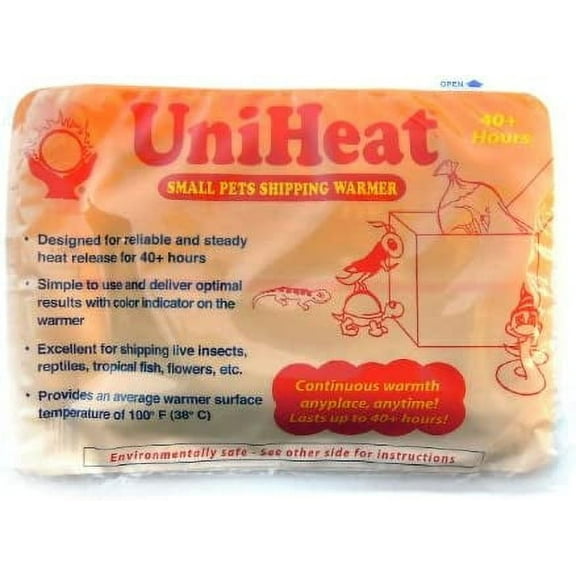
UniHeat Shipping Warmer 40+ hours (20 pack)
FAQ
How long do these shipping heat packs stay warm?
These shipping heat packs are made to provide steady warmth during transit. On the item pages you’ll find options labeled for approximately 40+ hours and others for about 72 hours. Actual performance can vary based on box insulation, airflow, cargo volume, and outside temperatures.
- Match the labeled duration to your expected transit time, with a buffer.
- Colder routes or larger boxes may require longer-duration options.
- In milder weather, fewer or shorter-duration packs may be sufficient.
Review the product description and customer reviews for real‑world notes, and always follow the instructions included with the pack. Results can vary with conditions.
Which shipments are these heat packs meant for?
These warmers are designed to help maintain a gentle, stable temperature for sensitive shipments such as baby chicks, aquarium fish, reptiles, and plants. They’re commonly used to add a cushion of warmth during transport, not to create high heat.
- Place the warmer so it doesn’t directly touch live animals or plant material.
- Provide ventilation as directed on the packaging; avoid fully airtight setups.
- Confirm any carrier-specific rules for live or perishable shipments.
- Choose a duration that covers the route, with extra time for delays.
Conditions vary by season and destination, so monitor and adjust your packing method as needed.
Should I pick 40+ hour or 72-hour packs?
Choosing between a 40+ hour and a 72‑hour pack depends on your route and weather.
- 40+ hour: Often suited for overnight or shorter, well‑insulated shipments in mild to cool weather.
- 72‑hour: Helpful for multi‑day transits, colder climates, or when you want extra buffer for delays.
- Consider box size, insulation quality, and how much ventilation your setup allows.
Plan conservatively and avoid overheating by using the minimum number needed for your box size and conditions. Check duration details on the item page and follow the usage instructions provided with the product.
How do I pack a box safely with a warmer?
Thoughtful placement can help these warmers perform more consistently in transit.
- Line an insulated shipper with padding to reduce heat loss.
- Position the warmer near a side or top panel, buffered by cardboard or paper so it doesn’t touch bags, animals, or plants.
- Allow for some airflow as directed by the packaging and carrier guidelines.
- Distribute cargo so air can circulate; avoid overpacking.
- Consider adding a thermometer strip to spot‑check interior temperature during test runs.
Every setup is different. A quick trial pack at home can help you fine‑tune placement and quantity before shipping.
How should I store unused heat packs?
Proper storage can help maintain performance until you’re ready to use the warmers.
- Keep them sealed in their original, unopened packaging.
- Store in a cool, dry place away from humidity and extreme temperatures.
- Check the packaging for any storage or shelf‑life notes and follow them.
- Keep out of reach of children and pets.
After use, let the warmer cool fully and dispose of it with household trash according to local guidelines. For specific care and storage details, refer to the instructions on the product page and packaging.
Popular in Shop Brand Products for Reliable Solutions
Related Products
iPower 6"x8" Under Tank Heater for Reptile Terrariums Heat Mats
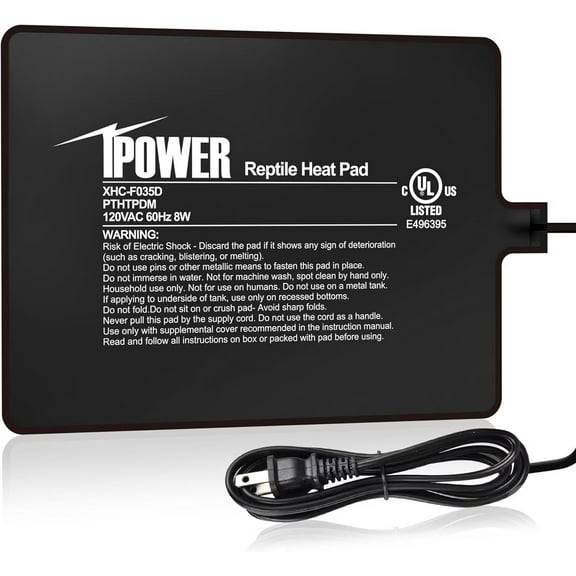 iPower 6"x8" Under Tank Heater for Reptile Terrariums Heat Mats$15.99current price $15.99
Exo-Terra Night Heat Lamp - 50 Watts (A19)
 Exo-Terra Night Heat Lamp - 50 Watts (A19)$8.99current price $8.99
Reptile Heating Ceramic Lamp Holder with Round Metal Anti-Scald Lampshade Without Bulb, Max 200W,Terrarium Heat Lamp Shade Reptile Accessories for Cold-blooded Pets Turtle Snakes Lizards Frogs Chicks
 Reptile Heating Ceramic Lamp Holder with Round Metal Anti-Scald Lampshade Without Bulb, Max 200W,Terrarium Heat Lamp Shade Reptile Accessories for Cold-blooded Pets Turtle Snakes Lizards Frogs Chicks$20.99current price $20.99
Zoo Med ReptiCare Ceramic Infrared Heat Emitter, 150 Watt
 Zoo Med ReptiCare Ceramic Infrared Heat Emitter, 150 Watt$24.99current price $24.99
Zoo Med ReptiCare Ceramic Infrared Heat Emitter, 100 Watt
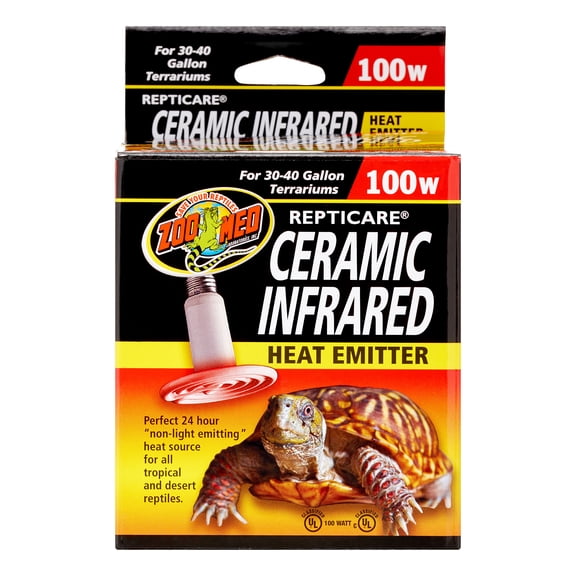 Zoo Med ReptiCare Ceramic Infrared Heat Emitter, 100 Watt$22.90current price $22.90
Zoo Med Laboratories 25 Watt Nano Infrared Heat Lamp
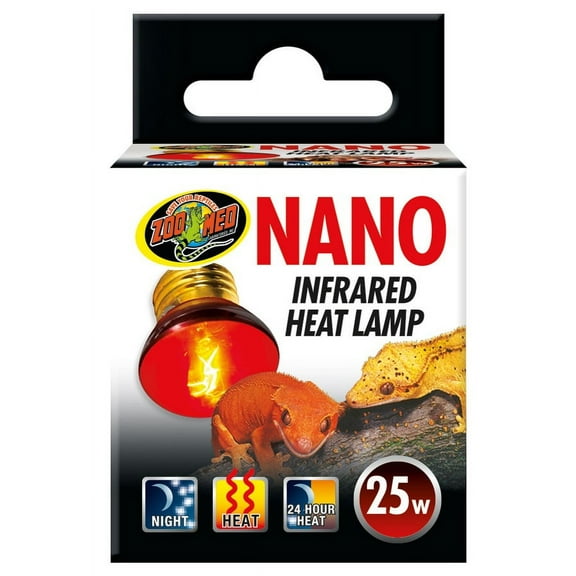 Zoo Med Laboratories 25 Watt Nano Infrared Heat Lamp$9.66current price $9.66
Flukers Deep Thermal Heat Lamp for Reptiles
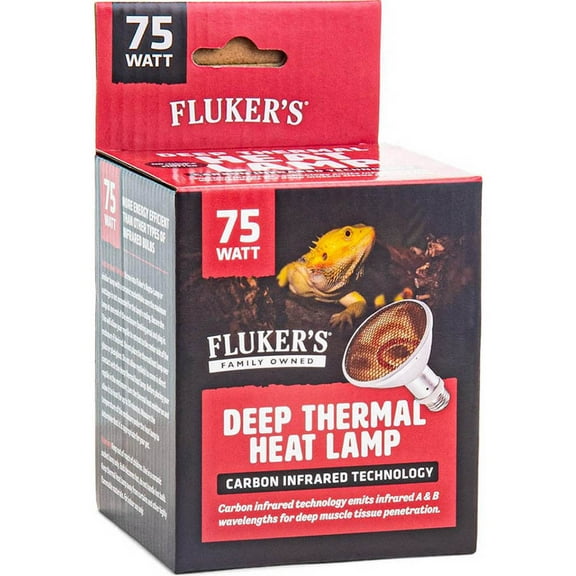 Flukers Deep Thermal Heat Lamp for Reptiles$22.96current price $22.96
Exo-Terra Sun Glo Tight Beam Basking Spot Lamps
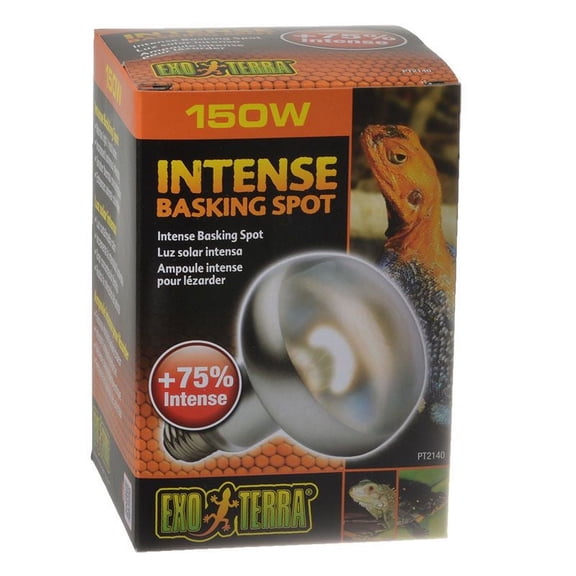 Exo-Terra Sun Glo Tight Beam Basking Spot Lamps$16.99current price $16.99
2 Pack Zoo Med Reptisun 10.0 Uvb Mini Compact Fluorescent
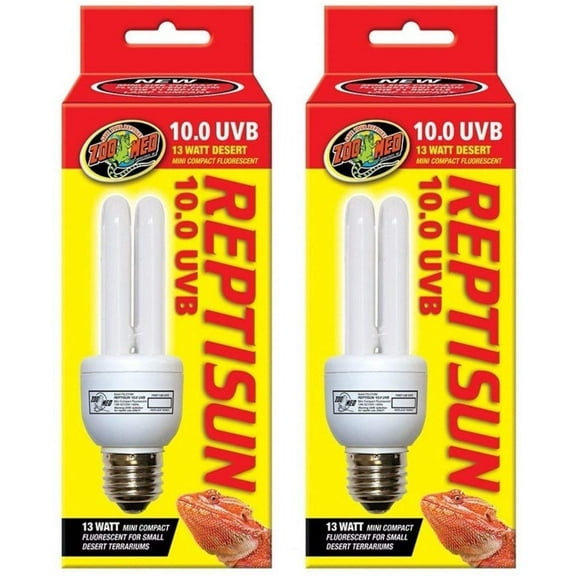 2 Pack Zoo Med Reptisun 10.0 Uvb Mini Compact Fluorescent$24.89current price $24.89
ZooMed Nano Infrared Heat Lamp 25 Watt
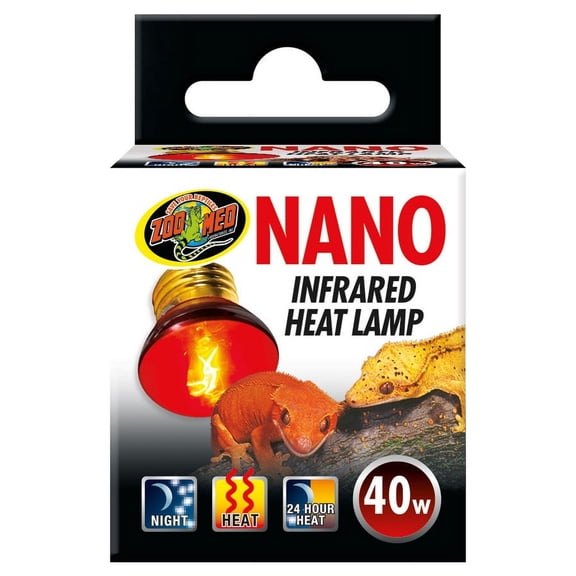 ZooMed Nano Infrared Heat Lamp 25 Watt$9.61current price $9.61

