


Mwiche Khumufumie
Key item features
- Mwiche Khumufumie
-
Africa's rich and varied history has been shaped by many factors, and the same could be said for Africa's captivating traditional and indigenous music styles, which in turn have influenced many other genres of music around the world. With its early beginnings, the traditional music of Africa has walked hand-in-hand with the development of cultures and languages, each with its distinct traditions and dialects that bring a unique flavor to the African folk tunes that are so much a part of the families, clans and communities that form a music heritage within Africa.
Nowhere is this more apparent than in the Luhya community in Kenya, where we clearly see the special relationship that exists between the Samia people, and their articulate dialect, and the delightful expression of their sacred folk music and folk music style. We could even go so far as to say that Samia folk tunes are closely tied to their art, folklore and religious practices, and also to the artistic influences within and without the Luhya community.
Notably, what makes African folk music style special is the sense of purpose and meaning that is attributed to the music--through its use in religious practices, ceremonies, and celebrations-- where audience participation is encouraged and even expected. The techniques and forms of the music, which give this genre a voice of its own, gives us reason to pay close attention to the characteristics that define this music. We can briefly point out the use of polyrhythmic techniques, percussion, shimmer, improvisational instrumentation, yodeling and syncopated rhythms that comprise African folk music, but none gets our attention more than the "call and response" of the singers, which shows the close connection between the language (dialect) and the music, all of which involves the singers and the audience in a musical conversation.
This arrangement by Wilson Shitandi combines two melodies commonly used in the praise of leaders or deities--depending on the culture--that typically have no specific title, and sometimes derive their name from an instrument or type of dance. Stylistically, this arrangement successfully weaves two themes together into one, the first being a lively and upbeat expression, and the second being more meditative and contemplative, both of which alternate throughout the music.
Importantly, the text for this chorus was originally written in Swahili, and later rewritten using the Samia dialect, which the composer feels is more fitting to the melody, with words drawn from Christian traditions, which again demonstrates that music and language are indeed closely linked in the folk music of Africa, as it is in this uplifting arrangement of Mwiche Khumufumie (Come Let Us Glorify Him). - By Songburd Music
Specs
- Music genreFolk Music
- Music release typeSingle
- Media formatCD
- Original release date2017-01-01
- Free shipping
 Free 30-day returns
How do you want your item?


About this item
Product details
Africa's rich and varied history has been shaped by many factors, and the same could be said for Africa's captivating traditional and indigenous music styles, which in turn have influenced many other genres of music around the world. With its early beginnings, the traditional music of Africa has walked hand-in-hand with the development of cultures and languages, each with its distinct traditions and dialects that bring a unique flavor to the African folk tunes that are so much a part of the families, clans and communities that form a music heritage within Africa.
Nowhere is this more apparent than in the Luhya community in Kenya, where we clearly see the special relationship that exists between the Samia people, and their articulate dialect, and the delightful expression of their sacred folk music and folk music style. We could even go so far as to say that Samia folk tunes are closely tied to their art, folklore and religious practices, and also to the artistic influences within and without the Luhya community.
Notably, what makes African folk music style special is the sense of purpose and meaning that is attributed to the music--through its use in religious practices, ceremonies, and celebrations-- where audience participation is encouraged and even expected. The techniques and forms of the music, which give this genre a voice of its own, gives us reason to pay close attention to the characteristics that define this music. We can briefly point out the use of polyrhythmic techniques, percussion, shimmer, improvisational instrumentation, yodeling and syncopated rhythms that comprise African folk music, but none gets our attention more than the "call and response" of the singers, which shows the close connection between the language (dialect) and the music, all of which involves the singers and the audience in a musical conversation.
This arrangement by Wilson Shitandi combines two melodies commonly used in the praise of leaders or deities--depending on the culture--that typically have no specific title, and sometimes derive their name from an instrument or type of dance. Stylistically, this arrangement successfully weaves two themes together into one, the first being a lively and upbeat expression, and the second being more meditative and contemplative, both of which alternate throughout the music.
Importantly, the text for this chorus was originally written in Swahili, and later rewritten using the Samia dialect, which the composer feels is more fitting to the melody, with words drawn from Christian traditions, which again demonstrates that music and language are indeed closely linked in the folk music of Africa, as it is in this uplifting arrangement of Mwiche Khumufumie (Come Let Us Glorify Him).
- Mwiche Khumufumie
-
Africa's rich and varied history has been shaped by many factors, and the same could be said for Africa's captivating traditional and indigenous music styles, which in turn have influenced many other genres of music around the world. With its early beginnings, the traditional music of Africa has walked hand-in-hand with the development of cultures and languages, each with its distinct traditions and dialects that bring a unique flavor to the African folk tunes that are so much a part of the families, clans and communities that form a music heritage within Africa.
Nowhere is this more apparent than in the Luhya community in Kenya, where we clearly see the special relationship that exists between the Samia people, and their articulate dialect, and the delightful expression of their sacred folk music and folk music style. We could even go so far as to say that Samia folk tunes are closely tied to their art, folklore and religious practices, and also to the artistic influences within and without the Luhya community.
Notably, what makes African folk music style special is the sense of purpose and meaning that is attributed to the music--through its use in religious practices, ceremonies, and celebrations-- where audience participation is encouraged and even expected. The techniques and forms of the music, which give this genre a voice of its own, gives us reason to pay close attention to the characteristics that define this music. We can briefly point out the use of polyrhythmic techniques, percussion, shimmer, improvisational instrumentation, yodeling and syncopated rhythms that comprise African folk music, but none gets our attention more than the "call and response" of the singers, which shows the close connection between the language (dialect) and the music, all of which involves the singers and the audience in a musical conversation.
This arrangement by Wilson Shitandi combines two melodies commonly used in the praise of leaders or deities--depending on the culture--that typically have no specific title, and sometimes derive their name from an instrument or type of dance. Stylistically, this arrangement successfully weaves two themes together into one, the first being a lively and upbeat expression, and the second being more meditative and contemplative, both of which alternate throughout the music.
Importantly, the text for this chorus was originally written in Swahili, and later rewritten using the Samia dialect, which the composer feels is more fitting to the melody, with words drawn from Christian traditions, which again demonstrates that music and language are indeed closely linked in the folk music of Africa, as it is in this uplifting arrangement of Mwiche Khumufumie (Come Let Us Glorify Him). - By Songburd Music
Specifications
Music genre
Music release type
Media format
Original release date
Directions
Fabric Care Instructions
Warranty
Warranty information
Similar items you might like
Based on what customers bought
Symphonie No 7 Leningrand $16.59
 $1659current price $16.59
Symphonie No 7 Leningrand
Lieder Recital $13.49
 $1349current price $13.49
Lieder Recital
Apotheoses $26.61
 $2661current price $26.61
Apotheoses
FORMS 1-4 $52.25
 $5225current price $52.25
FORMS 1-4
AFANGAR $24.86
 $2486current price $24.86
AFANGAR
BEST CHOPIN 50 $12.33
 $1233current price $12.33
BEST CHOPIN 50
Ocon: Caleidoscopio $25.94
 $2594current price $25.94
Ocon: Caleidoscopio
Missa Veni Sancte Spiritus $20.73 Was $25.35
 $2073current price $20.73, Was $25.35$25.35
Missa Veni Sancte Spiritus
Dalibor $36.80
 $3680current price $36.80
Dalibor
BRAHMS: KLAVIERKONZERT NO. 1 $67.14
 $6714current price $67.14
BRAHMS: KLAVIERKONZERT NO. 1
Symphonies 35 & 36 $17.31
 $1731current price $17.31
Symphonies 35 & 36
Syntopia $17.10 Was $19.99
 $1710current price $17.10, Was $19.99$19.99
Syntopia
Violin Concertos $27.09
 $2709current price $27.09
Violin Concertos
Almost in G $24.30
 $2430current price $24.30
Almost in G
Bruckner 3 $22.89
 $2289current price $22.89
Bruckner 3
Pno Pieces $28.98
 $2898current price $28.98
Pno Pieces
Vikingur Olafsson - Opus 109 - Music & Performance - CD $18.37 Was $21.07 $131.21/ea
 $1837current price $18.37, Was $21.07$21.07$131.21/ea
Vikingur Olafsson - Opus 109 - Music & Performance - CD
Chopin: Ballades & Scherzos $12.20 Was $14.60
 $1220current price $12.20, Was $14.60$14.60
Chopin: Ballades & Scherzos
Britten $59.48
 $5948current price $59.48
Britten
Songs 1954-55 $24.97
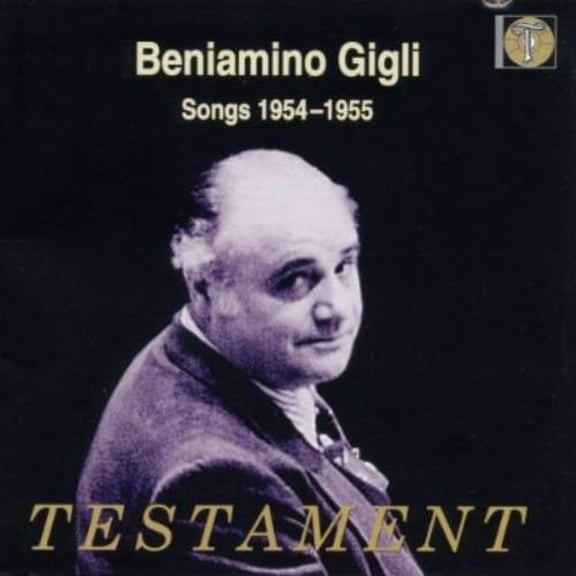 $2497current price $24.97
Songs 1954-55
