Controls of all kinds are integral parts of restaurant equipment operations. A control is a switch or other device by which a machine is regulated. A control may be manual or automatically operated. An electro-mechanical control typically consists of multiple relays, timers, and/or counters wired together on an enclosure panel.
Electro-mechanical control is also referred to simply as "Relay Control", which is a more accurate term since solid state electronic relays, timers and counters are standard components. Contactors, motor and compressor starters, valves, thermostats and other output devices are used to turn on/off motors, indicator lights, heating elements and other components used in the equipment.
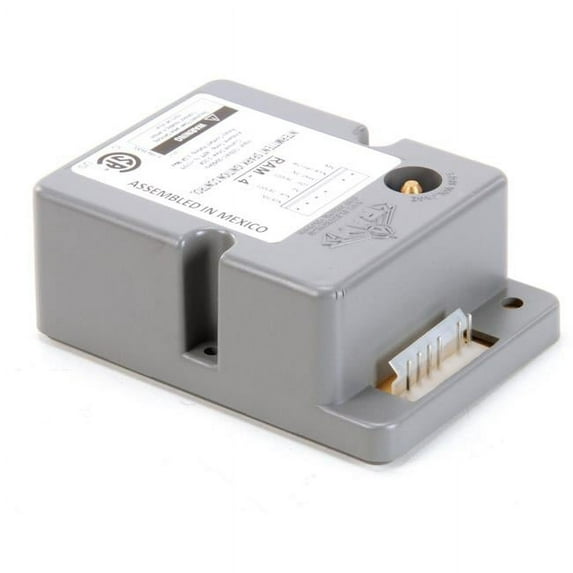
An ignitor is a device used to initiate combustion - the sequence of exothermic chemical reactions between a fuel and an oxidant accompanied by the production of heat and conversion of a chemical state. The release of heat can also result in the production of light in the form of either glowing or a flame. A gas lighter is a firestarting mechanism used to ignite gas stoves which do not have automatic ignition systems. It relies on a physical phenomenon called the piezoelectric effect to generate an electric spark, which ignites the combustible gas from the stove burner.
A pilot light is a small gas flame, usually natural gas or liquefied petroleum gas, which serves as an ignition source for a more powerful gas burner. In a pilot assembly, there is thermocouple sitting in the pilot light's flame. The electricity that is created from the flame contacting the thermocouple wire runs to a small electromagnetic valve and holds it open. If the pilot light blows out, the thermocouple quickly cools off. It stops generating electricity and the valve closes.
Specifications - Height: 2.75?in.?
- Width: 7.85?in.?
- Length: 9.15?in.?
- SKU: PTSWN53058


 WARNING: